

Srinagar’s Visual Skin: Art, Erasure, and the Counter-Archive of Memory in Kashmir
Author: Pen
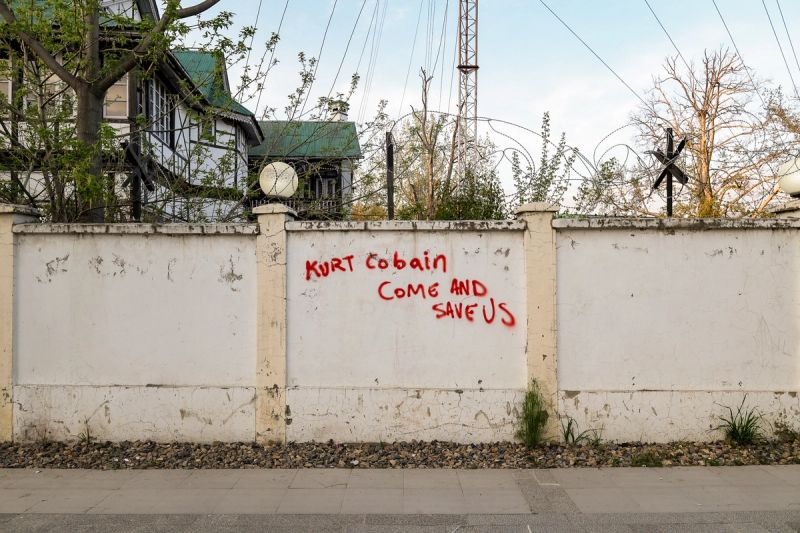
In the labyrinthine alleys of Srinagar, the walls do not merely support roofs or define boundaries; they hold the weight of a “schizophrenic entity” that is both the self and the surrounding space. For the youth of Kashmir, the city has ceased to be a simple geographical location and has instead become a “condition”—a complex landscape of lived experiences where history is consistently contested, and memory serves as a site of active, vital force. To walk through these streets is to encounter a counter-visual narrative written in the fluid language of street graffiti, an art form that functions as a “spontaneous archiving of public memory” in the face of enforced silence.
The Fluid Language of Discomfort
For the artists and youth navigating this volatile space, art is a “fluid language” without a set syntax. It is an infiltrative tool, described as being “precise in its approach and yet like literature with its choices.” This is not the overt, loud propaganda often associated with conflict zones; rather, it is a “spatiality of discomfort” designed to unsettle structures of power. The act of tagging a wall or scribbling a line of poetry is a deliberate attempt to create an alternative space, one that unapologetically fractures the normative structures of power that seek to define the region.
In a world increasingly saturated with fleeting images, Srinagar’s youth use graffiti to force a “pause.” This pause is a conceptual site—an “interruption in the everyday rush” that compels the viewer to stop and listen to what is being silenced. This “way of listening” is the very essence of their art. It is a method of making visible the profound contradictions of a place that remains simultaneously full of “beauty and full of horrors.”
Dissent as a Necessity for Survival
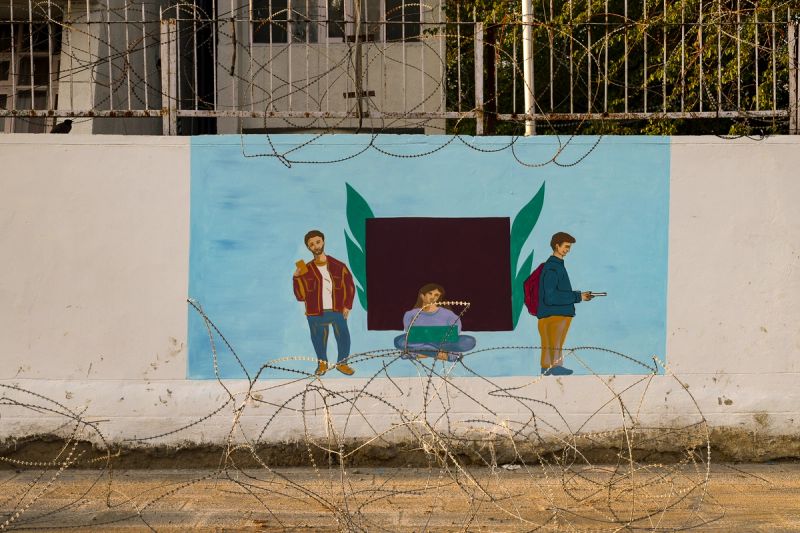
The sentiment among Srinagar’s youth is not defined solely by reactive anger, but by “quiet forms of resilience.” In this context, dissent is inseparable from daily existence; it is described as a “tag that one has to bear.” These artists do not necessarily seek to “shout” their resistance to the world; rather, they insist on the existence of “other truths,” says Gulzar, an interdisciplinary visual artist from Srinagar, Kashmir, now based in New Delhi. Graffiti, therefore, emerges as a “necessity to survival.”
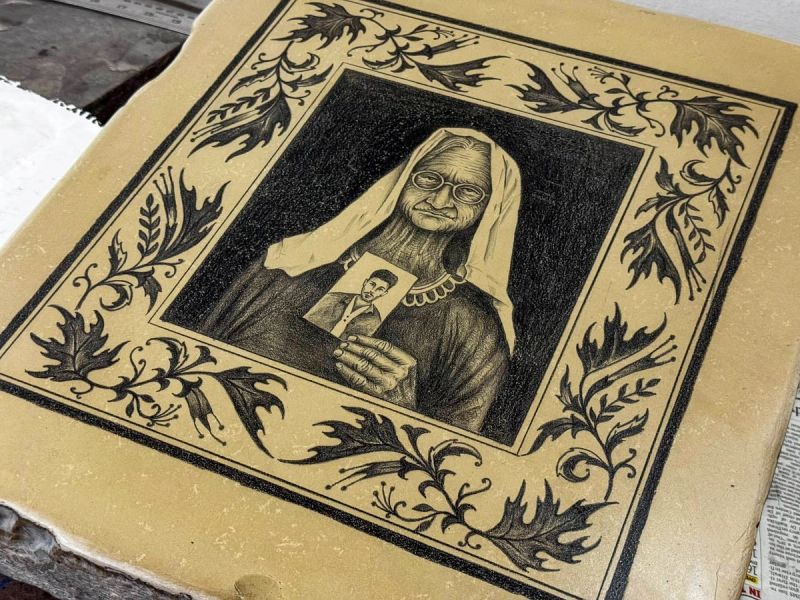
The work serves to commemorate the stories of those who “exist yet have ceased to exist,” those individuals who drift and eventually disappear into the landscape of violence. The youth describe their practice as creating a “forensic image”—an iteration of experience that goes beyond the mere archiving of events to become “being inside the conscious, says Gulzar. This art commemorates the “enforced collapse and the casualty of space and home.” Every tag is a reclamation of a space that the state has attempted to erase from the “chambers of history.”
Gulzar’s art emerges as defiant memory in Kashmir’s chokehold of blackouts and silenced voices. His recent work overlays poet Agha Shahid Ali on the contested Instrument of Accession in “Undocument,” Gulzar maps conflict’s scars onto canvas and sculpture, countering official amnesia with urgent, haunting truth.
The War of Reclaiming Erasure
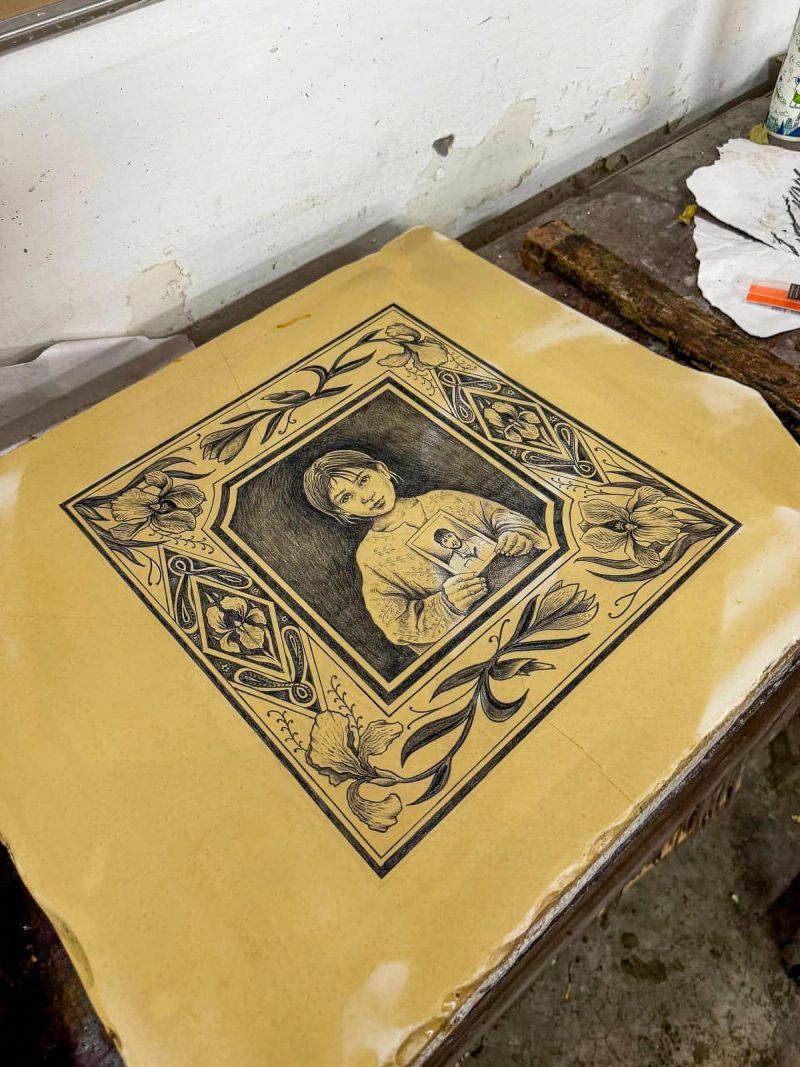
In Srinagar, the state employs erasure as a primary tool of control, frequently whitewashing walls and removing graffiti to maintain a “dominant narrative.” Consequently, the youth view their creative work as an act of “unforgetfulness against forgetfulness,” says Khawab, a contemporary Kashmiri visual artist from Srinagar whose work is closely tied to the politics of silence, loss, and communication shutdowns in Kashmir. Because there is a stark “absence of official commemoration” for the tragedies the community has faced, the people turn to the walls to remember.
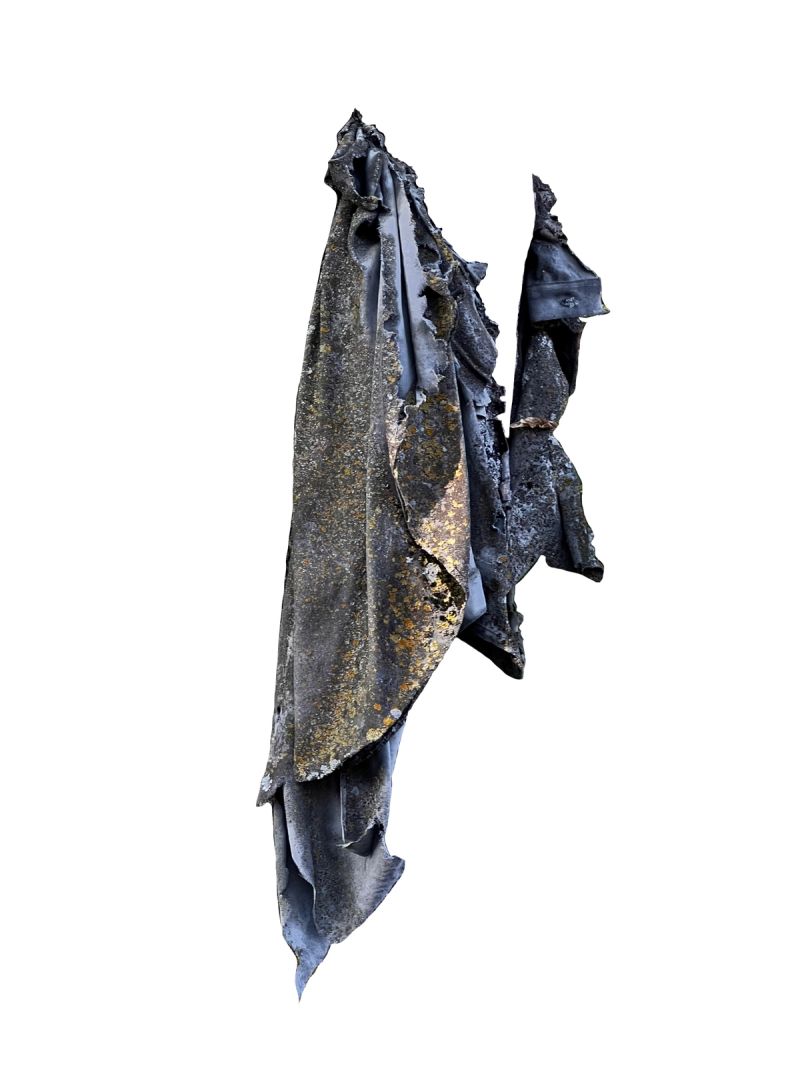
Khawab’s work folds the weight of Kashmir’s silence into delicate paper planes and frayed sheepskin, turning classroom chairs and hospital equipment into quiet monuments of a life lived under occupation. His work maps the fractures of loss, censorship, and resistance onto the fragile objects that ordinary people touch every day.
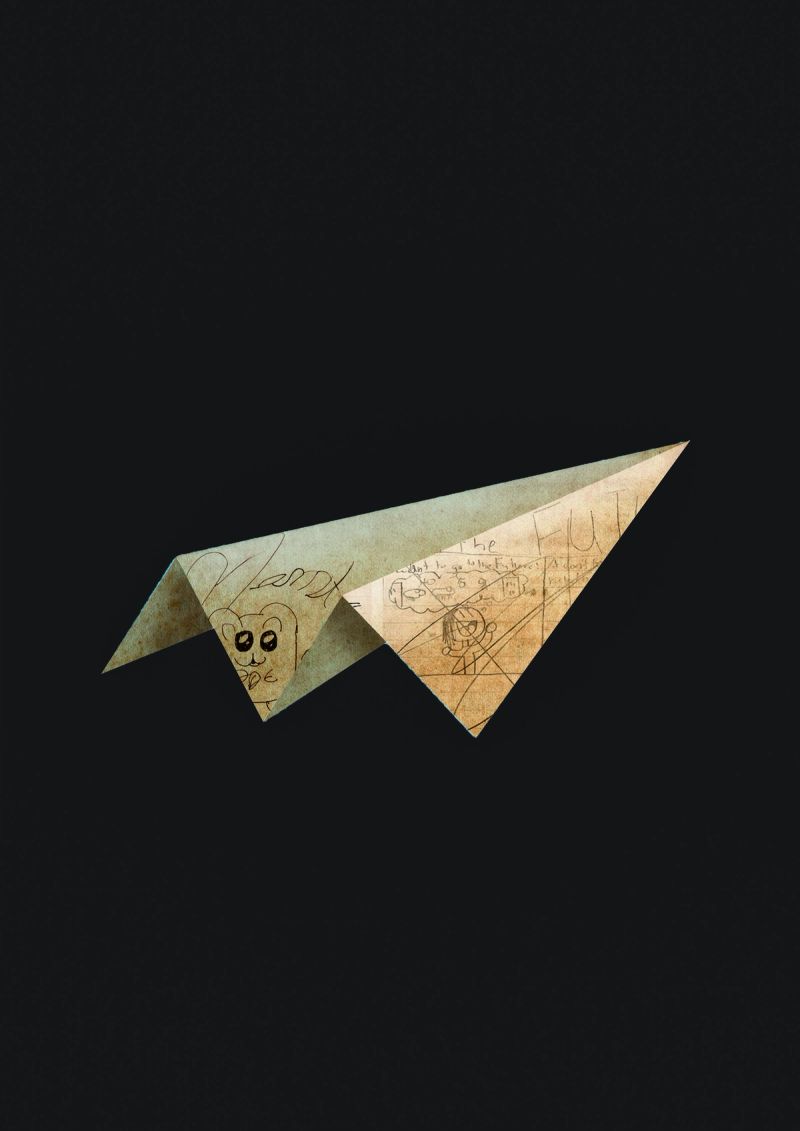
The act of graffiti is described as a “war of reclaiming erasure.” Even when a tag is painted over by authorities, the “fragility of memory” becomes a powerful reminder of what was once there. In this environment, the erasure itself becomes an important conceptual site to ponder. The youth work with fragments, incomplete stories, and traces, acknowledging that while memory is inherently fragile, it remains the core of their practice.
The “trace” left behind after an erasure serves as a powerful reminder that something was intentionally removed, transforming the act of removal into a site for reflection. This ongoing cycle ensures that the existence of art remains inseparable from dissent, as it constantly threatens and questions the existence of the state’s singular “linear truth.”
The Pathology of the Ache
One of the most potent aspects of street graffiti in Srinagar is the “suspension of the visible author.” By removing the individual author, the message transitions from a personal statement to one that belongs to the collective. The art utilizes icons and elements recognized by the wider population—items that have the power to “stir up emotions that are radically charged” and “generate discussions and discomfort.”
This movement is not merely vandalism; it addresses the fundamental questions of “who has the right to speak in public space” and “who controls the visual narrative of a city.” When the youth occupy a space—whether through a subtle gesture, a slogan, or a “choreographed re-enactment”—they are reactivating collective memory to tackle “collective amnesia.”
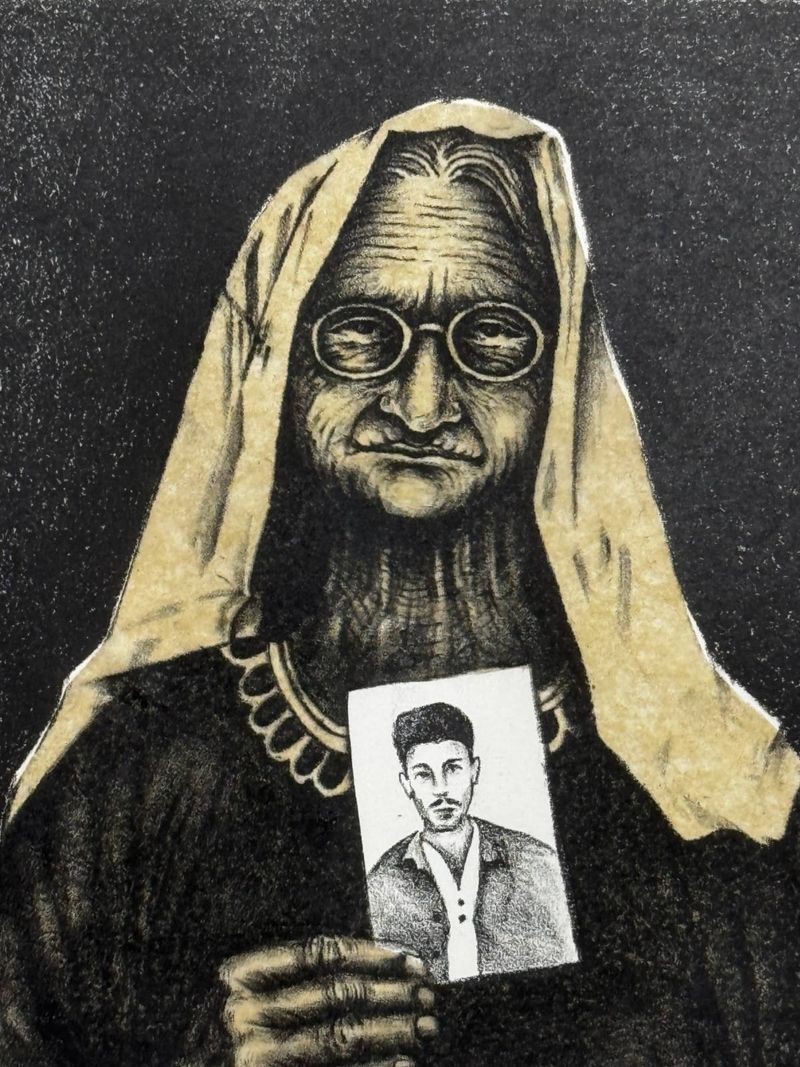
The focus of this artistic movement is the preservation of memory and resilience rather than the dissemination of traditional political statements. The youth are “less interested in delivering political statements than in asking how power structures shape what is remembered,” says Chashma, a contemporary visual artist and researcher whose work straddles drawing, installation, and performance, often rooted in the contested landscapes of Kashmir. Their art is an “experiential understanding” of living through events, a way to “inhabit these contradictions” without necessarily feeling the need to resolve them.
Chashma’s work paints Kashmir’s checkpoints, roadblocks, and quiet interiors as dream‑like tableaux, where a chai cup or folded blanket bears the weight of surveillance and displacement.
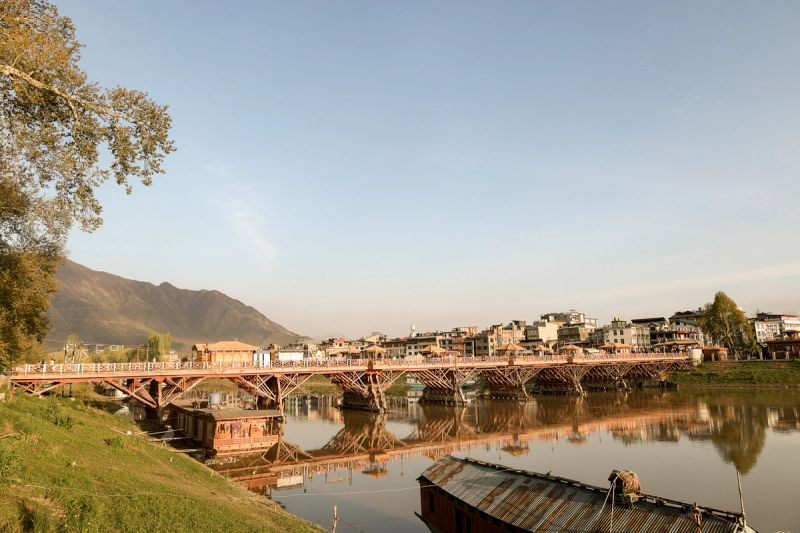
For a global audience, this narrative offers a window into the “pathology of the ache” that is Kashmir. To understand the graffiti on Srinagar’s walls is to look past representational “poster-making” and feel the “sensation” of a people trying to “reclaim what has been tried again and again to be erased.” It is a story of cultural continuity, where the landscape itself—the streets, the abandoned structures, and even the trees—becomes a witness to the human presence.
The Counter-Archive in the Digital Age
For young artists, this movement represents a “counter-archive.” It is a direct challenge to “linear truth” and an insistence on the existence of “other truths”. In the digital age, these “subtle gestures” and “fragments of personal memory” find a new life on social media, where they serve as “activations” for a global audience.
Gulzar has fused haunting sculptures with his own body in live performances, tracing Kashmir’s intimate scars onto collective memory, turning viewers into witnesses of the Valley’s daily violence.
The message to the world is clear: in Srinagar, the existence of art is, in itself, an identity of dissent. It is a method of inquiry, a “language which takes place of that ordinary language,” and a means to process the realities of a “volatile place” where uncertainty is prolonged, and memory is a battlefield.
By avoiding the loud visibility of traditional propaganda, artists find “more freedom to work.” Instead of delivering blunt political statements, they are more interested in asking “subtle questions” about who shapes memory and who controls the archive. Ultimately, quiet resistance is preferred because it is “inseparable” from the artists’ daily lives.
By focusing on the “poetics of home” and the “stories told quietly,” the youth of Srinagar ensure that their resilience is not just a footnote in history, but a living, breathing part of the city’s visual skin. They are not just making art; they are living through it, ensuring that even in the face of enforced silence, the walls will always have something to say. This transforms the geographical location into a “landscape of lived experiences” where history is consistently contested, and the physical environment is used to commemorate the “enforced collapse” of the home. Gulzar and Khawab’s work echoes. In this volatile environment, the mere existence of art becomes the ultimate way to reclaim what the state has tried again and again to erase from history.
Paint is three things combined: pigment, binder, and solvent. The pigment is milled to a uniform particle size and dispersed into the binder, which is linseed oil in the case of oil paint, acrylic emulsion for acrylics, and gum arabic for watercolor. The mixture is then thinned to working consistency with solvent. Industrial production runs this process through high-shear mixers and triple-roll mills at speed. Artist-grade production runs the same process slower, at higher pigment load and with fewer fillers. That difference in formulation accounts for the difference between a tube that costs four dollars and one that costs forty.
Stories

STAY UPDATED
Sign up to be the first to find out when new stories and merch drop on THROAT. We respect your privacy and will never share your information with any third-party vendors. For real.