Let Us Spray: Graffiti in the Fight Against Techno-Fascism
Author: Georgia Norton
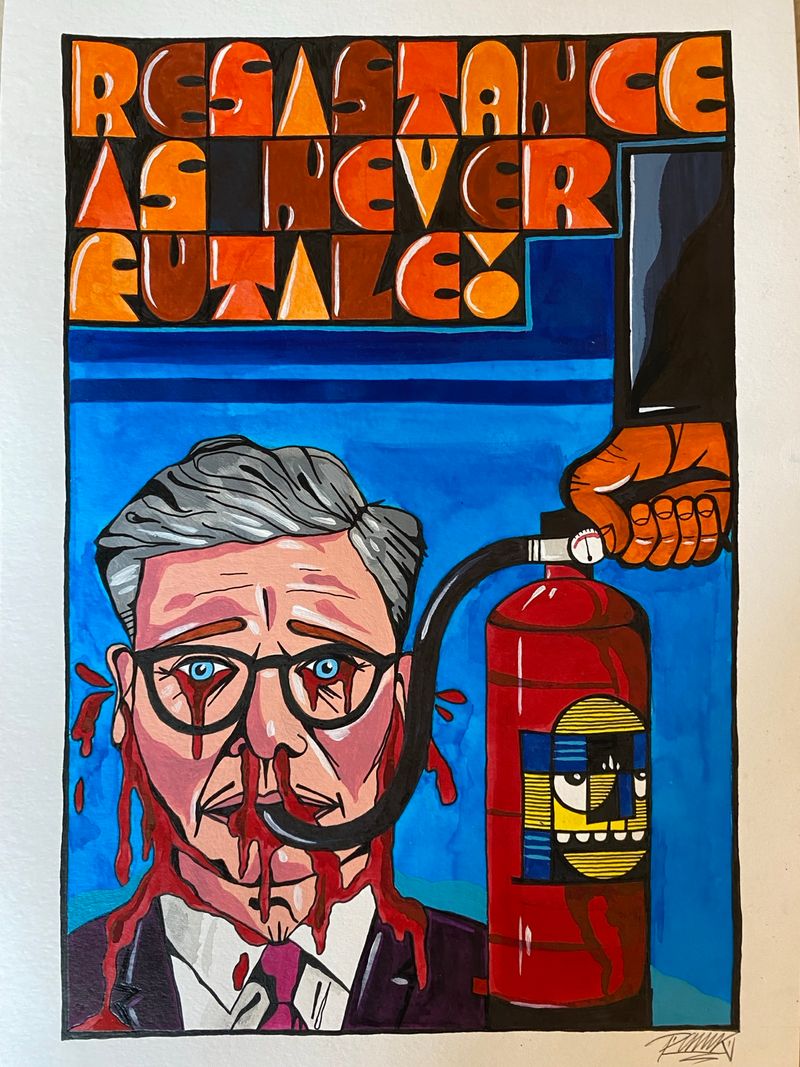
How many children raised in a major world city look around the urban landscape and see the buildings and fences and trainlines all around them as things to be grappled with, traversed, scaled and decorated? For the artist JACK PANIK London offered encounters with an increasing number of canvases as his confidence grew during his teenage years, exploring the terrain to seek out new sites and to document his work in photographs. As his strength and height grew so did access to sites – and the graffiti artists that first inspired him to paint. Back then, ‘paint’ meant tag-bombing brick walls and trains; today it means bold acrylics on canvas, screenprinting, working with fabric and board, and juxtaposing anti-fascist and anti-imperialist slogans with collage. Outdoor lettering artworks are in the mix still, too.
“You have to learn the intricacies of the city… to observe, know the tunnels, the stairwells, the canals, the rooftops – and the demographics. Skating and graffiti are liberation.”
Subverting and commandeering public spaces and the public’s attention are thrilling, addictive experiences that shape protestors’ creativity. The empowerment young people have felt discovering graffiti culture as resistance to their “alienation in capitalist culture” becomes motivation to make more and better art, to “map their cities and leave their mark”, as PANIK puts it, acknowledging he romanticizes his early experiences. Those formative days were a time before social media and the widespread co-opting of talent by corporate brands. The main reflection PANIK returns to is the “positive release” and freedom that navigating a city, interacting with its diversity of population and surfaces, brought a young mind. But heartbreak, too, when the risks taken lead to tragedy: a crew member died while painting on the train lines in 2006. Seeing collaborators get injured, in trouble with the police, or overdose, was part of the journey of creators putting their bodies on the line for the culture.
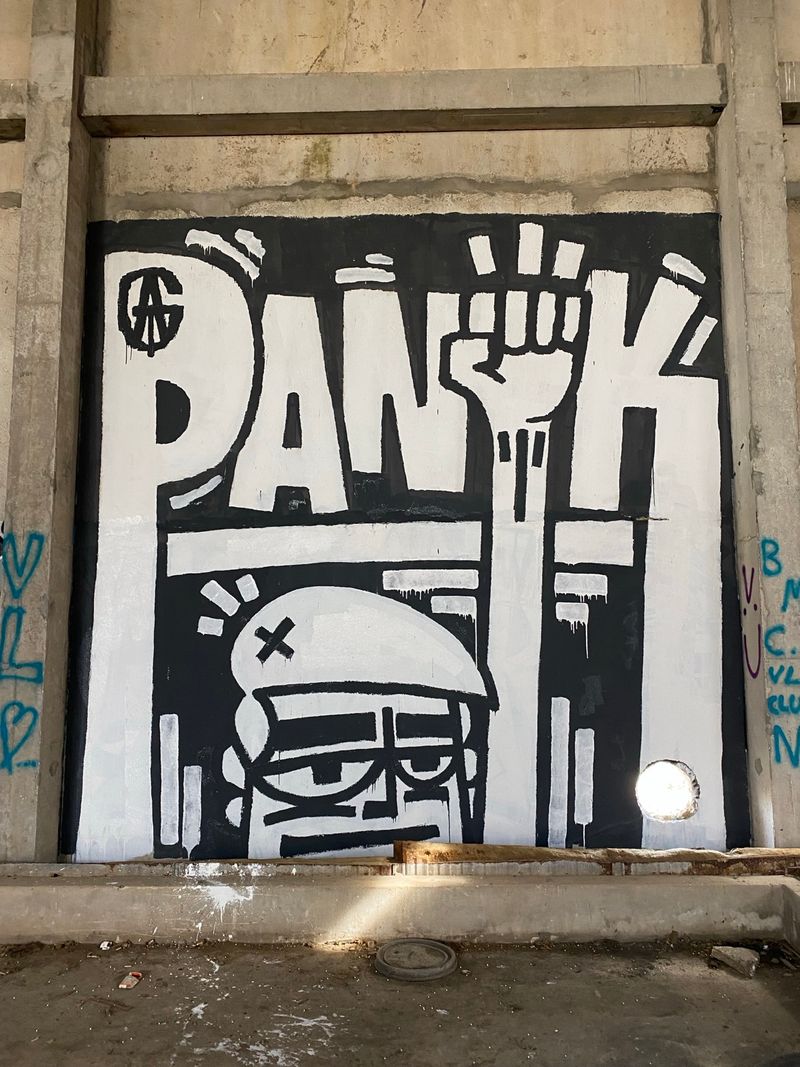
That less romantic side of street art got PANIK his break as a “more socially-acceptable artist, let’s say”: community service following a case against him was spent re-painting a community centre which resulted in him creating a mural for that organisation, turning a punishment into a prize and for a few years prior to that he had been working within the art world creating murals and exhibiting work. PANIK’s work today with representations of people or places he’s met or observed, is still large-scale, still anchored in the ways of using color, shape, light and shade that he learned while painting the streets trainlines and rooftops across London s). He hopes people will continue to take chances and trust young people, and support them to use creative outlets for their frustrations and fears. His school let him and his peers paint on a designated area when starting out in a surprising move to do more than embrace the graffiti impulse – to showcase it.
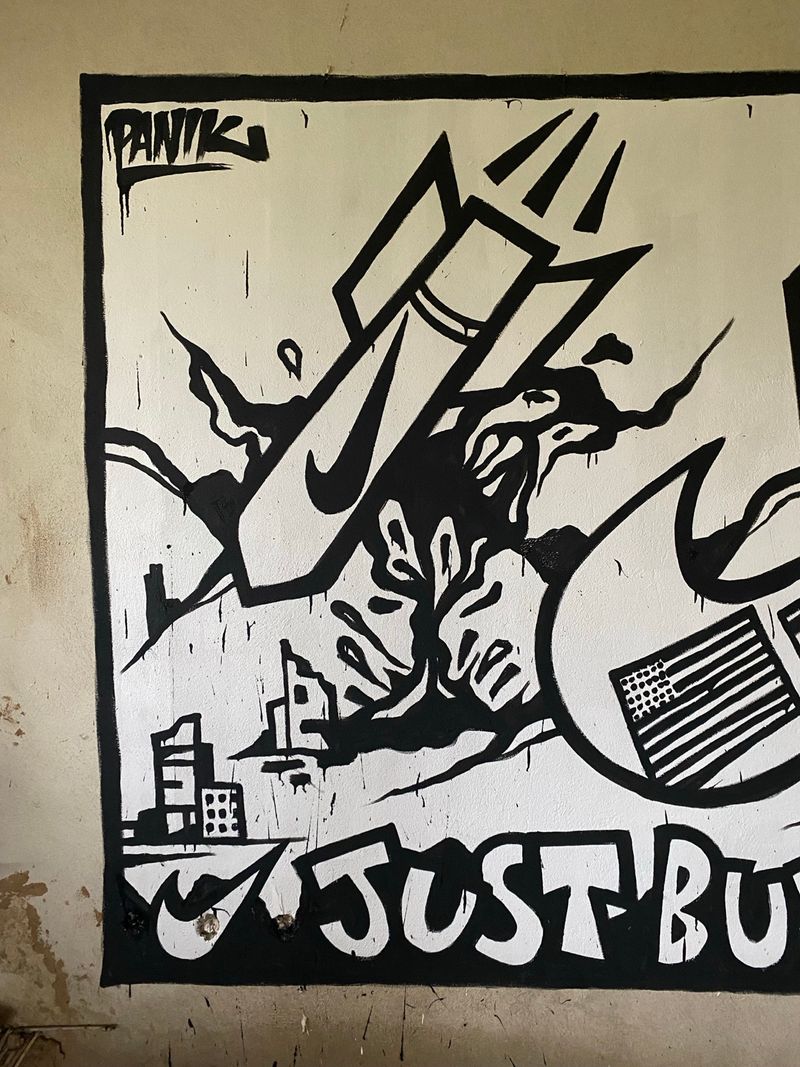
“My generation was neutralized through neoliberalism – comforts and distraction through consumerism delivered off the back of causing misery for people elsewhere. Individualism.I believe we were sold the illusion of democracy. But my parents’ generation protesting, taking anger out into the streets, really inspired me. A lot can be achieved in the streets.”
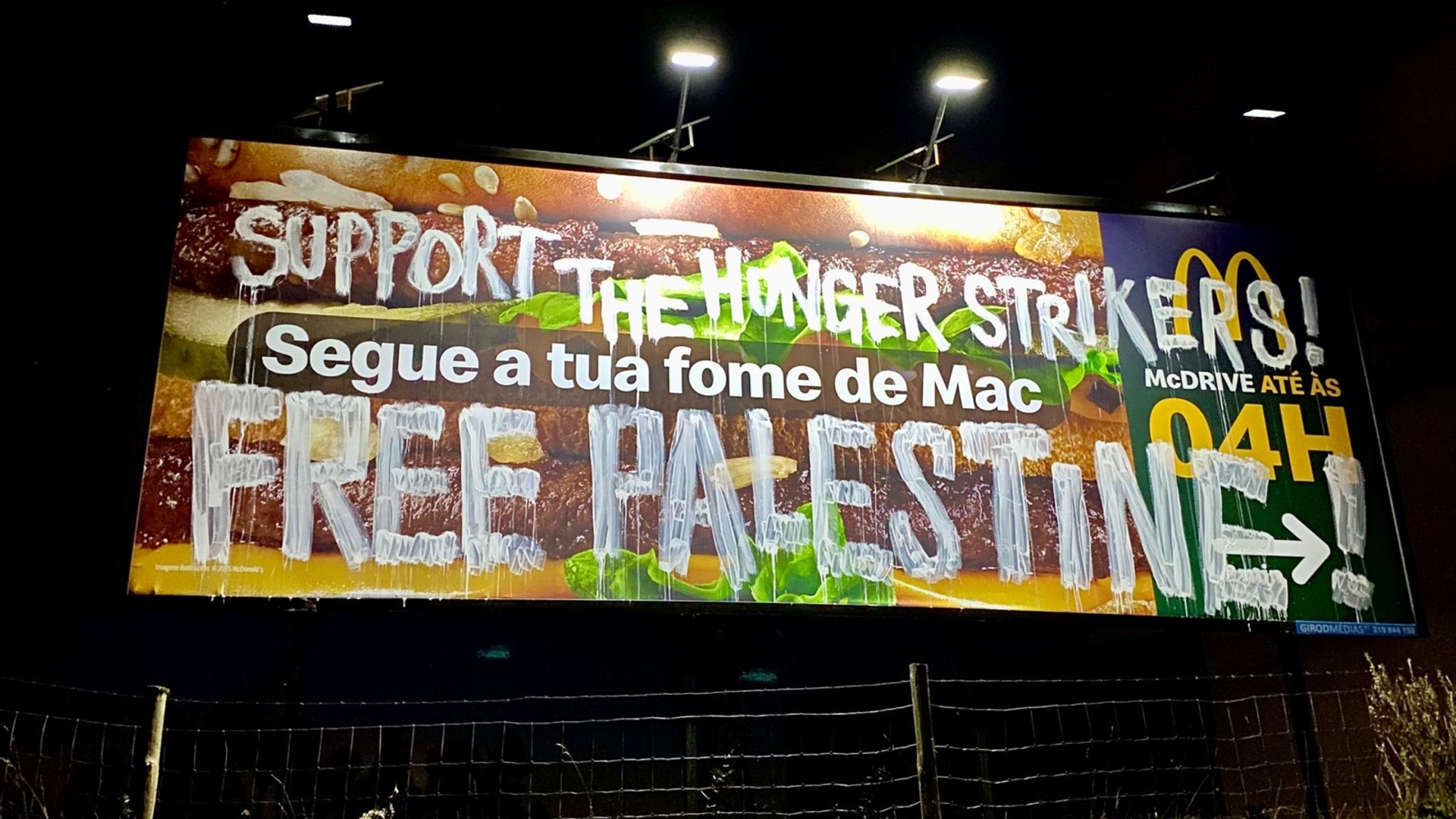
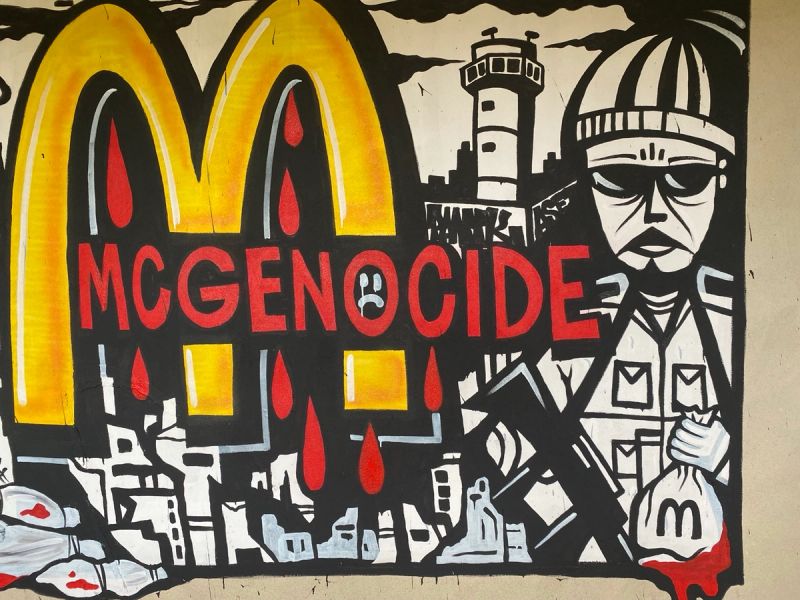
The audacity to deface public and commercial property, in PANIK’s case, wasn’t only about youthful anti-authoritarianism, as he says his parents were progressive, Leftists and tolerant about the scrapes he got into. The opportunity for graffiti to be about more than building a personal brand, and getting the artist’s own name out there, increasingly appealed to Jack. “You’d see a bit of ‘Fuck the Tories’ or ‘Free Palestine’ in the past”, he reflects, on the politicisation of his original medium, “But the global issues we’re facing today are making people take matters into their own hands, and to protest loudly and visually”. Specifically, “inequality soaring and capitalism collapsing, the genocide in Gaza, crisis in Sudan and the Congo…it’s the systems that connect it all which we have to confront – and exert pressure on our complicit politicans”. Forceful direct action in resistance to state violence – this is what he believes is “required of people” who make art, especially on the streets. And as someone who’s “always essentially had disdain for the British establishment” PANIK keeps the faith that “[graffiti] writers will mobilize to fight fascism”. He’s part of an open letter to spray paint companies by artists imploring them to divest from Israeli investments, as part of the global BDS movement he’s passionately involved in.
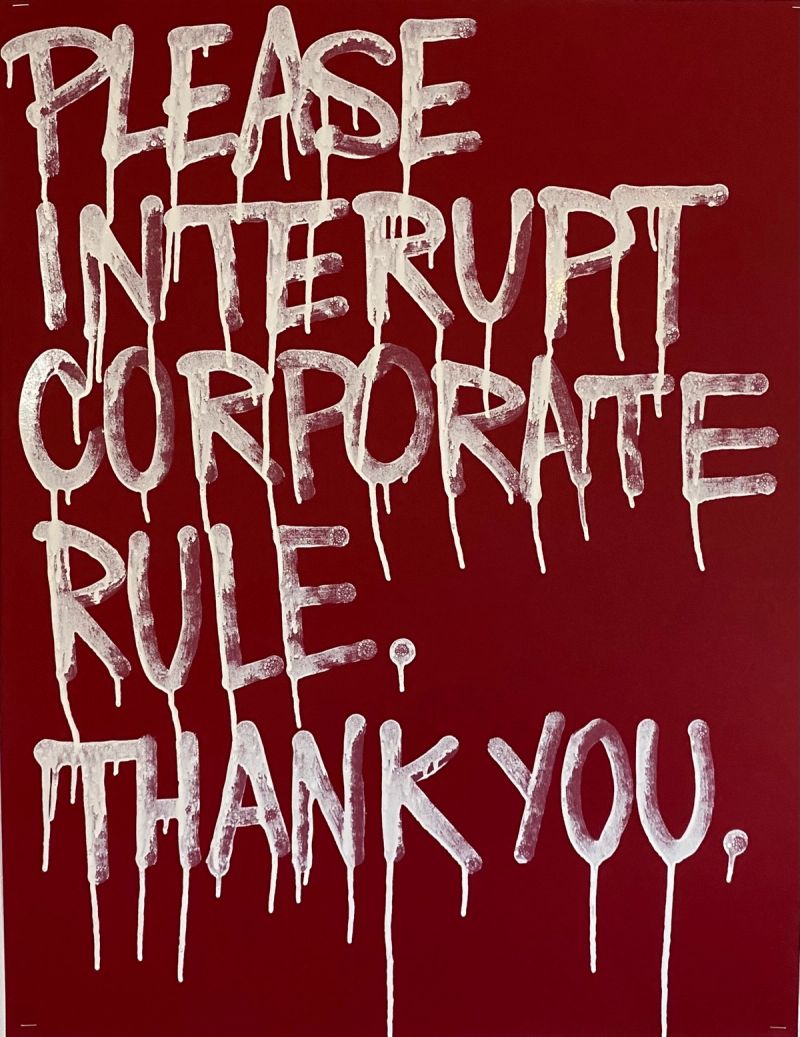
Being a parent to three young children has given him further perspective: hoping for them that they grow up vigilant and questioning, and creative in their expression too, something that occurred so organically for him. “I'm in a place where I’m now able to balance more of my artwork and business with activism, and channelling it through my art.” Lucky for us and the world. Check out JACK PANIK on his instagram @jack__panik
“Genocide in Gaza has changed everything. Radicalized more people… From Gary Lineker and Kneecap or Bob Vylan, to Miss Rachel, speaking out is normalized.And from BlackRock to Palantir, exposing how imperialism IS capitalism, and has to be challenged.”
Using art as tool for activism PANIK has always strived to empower young people in his hometown and speak out about the ongoing youth violence epidemic in London. Addressing inequalities, standing up for the oppressed, and challenging the role of capitalism and western imperialism in the destruction of our planet will always remain a central feature of PANIK's work.
Stories

STAY UPDATED
Sign up to be the first to find out when new stories and merch drop on THROAT. We respect your privacy and will never share your information with any third-party vendors. For real.