
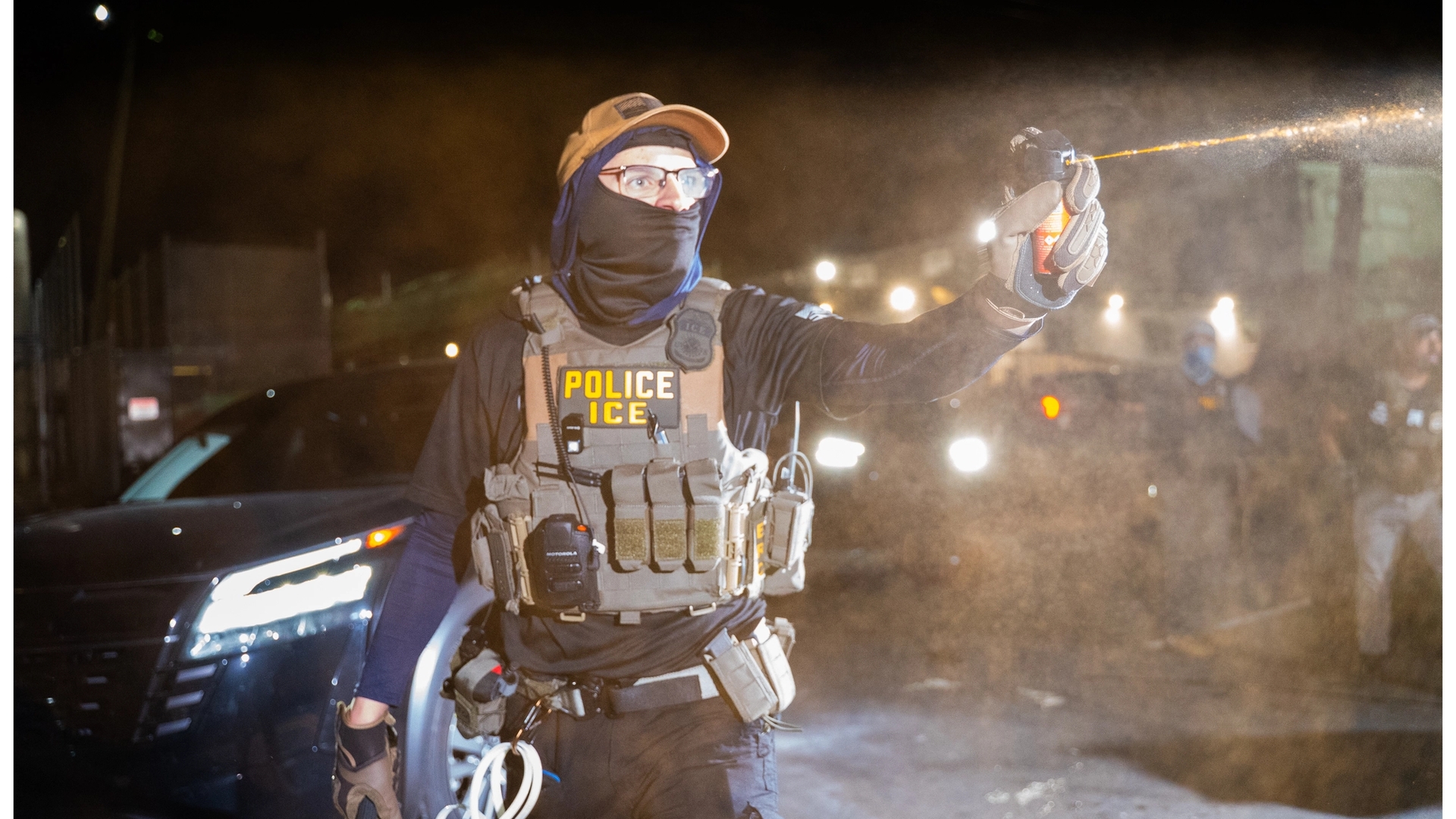
© Will Allen-Dupraw
One Nation Under.....
Author: THROAT Staff Writer
You were not on assignment on January 6. How did you come to be at the Capitol?
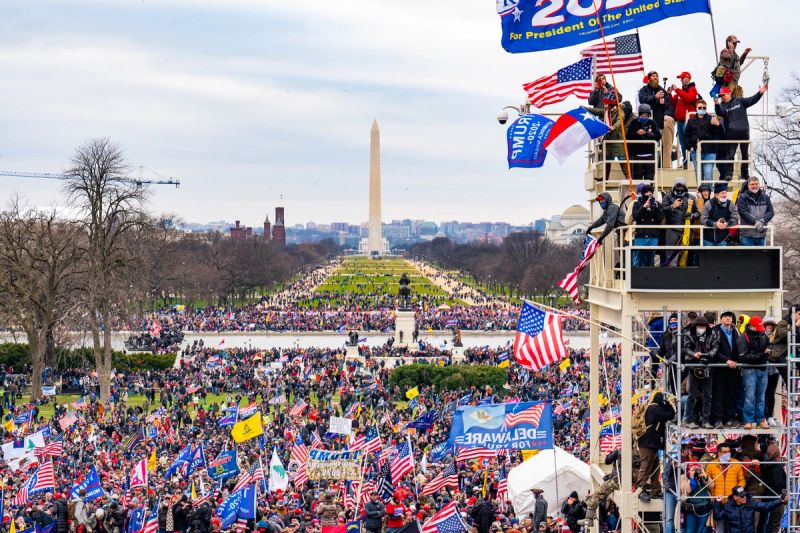
A friend of mine said, "Trump rally, D.C., go." That's how little research I'd done. It started as essentially just a big Trump rally out on the National Mall. I didn't even know they were planning to march to the Capitol. So when people started leaving (and honestly, they started leaving before Trump was done talking), I saw a lot of people walking that way and said, all right, I'm going to go cover the story.
At that point I was just photographing the people in the crowd. I didn't really know what you needed to do to comprehensively capture a story. I was partly on automatic, partly just feeling out the scene. It was low stakes for me. I hadn't spent a lot of money to be there. I was seeing what came of it.
At what point did you recognize that it was no longer a rally?
Once things got to the Capitol, people started getting riled up and the crowd got more packed together. You could feel the energy shifting. But it really wasn't until they started breaking past the police barricade that I realized I was in a situation that was new to me.
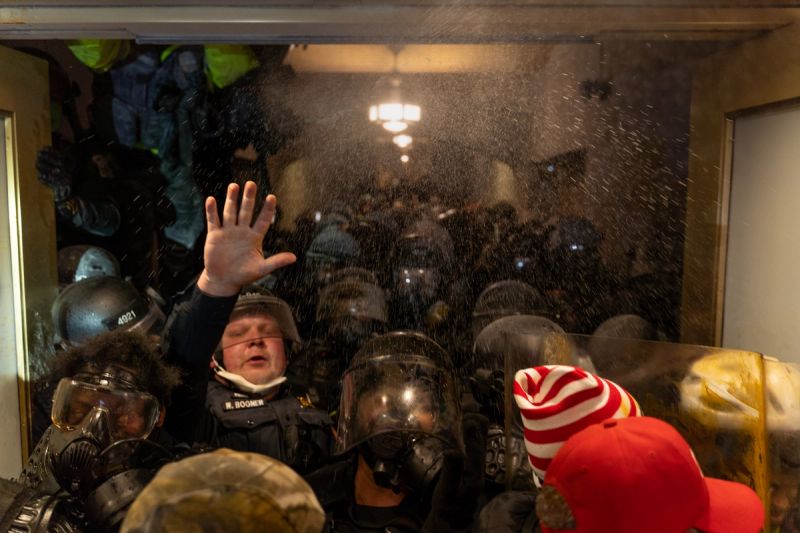
I was on the side of the Capitol that looks out over the Mall. I'd never been anywhere pepper spray was being used. That's not true. I'd photographed a Black Lives Matter march that turned into a more heated event in Charleston one time. But that was tame compared to this. Once I was up on the steps, jammed in with all these Trump supporters, it was a unique and new feeling.
You were caught in a crush on the Capitol steps. Describe what happened.
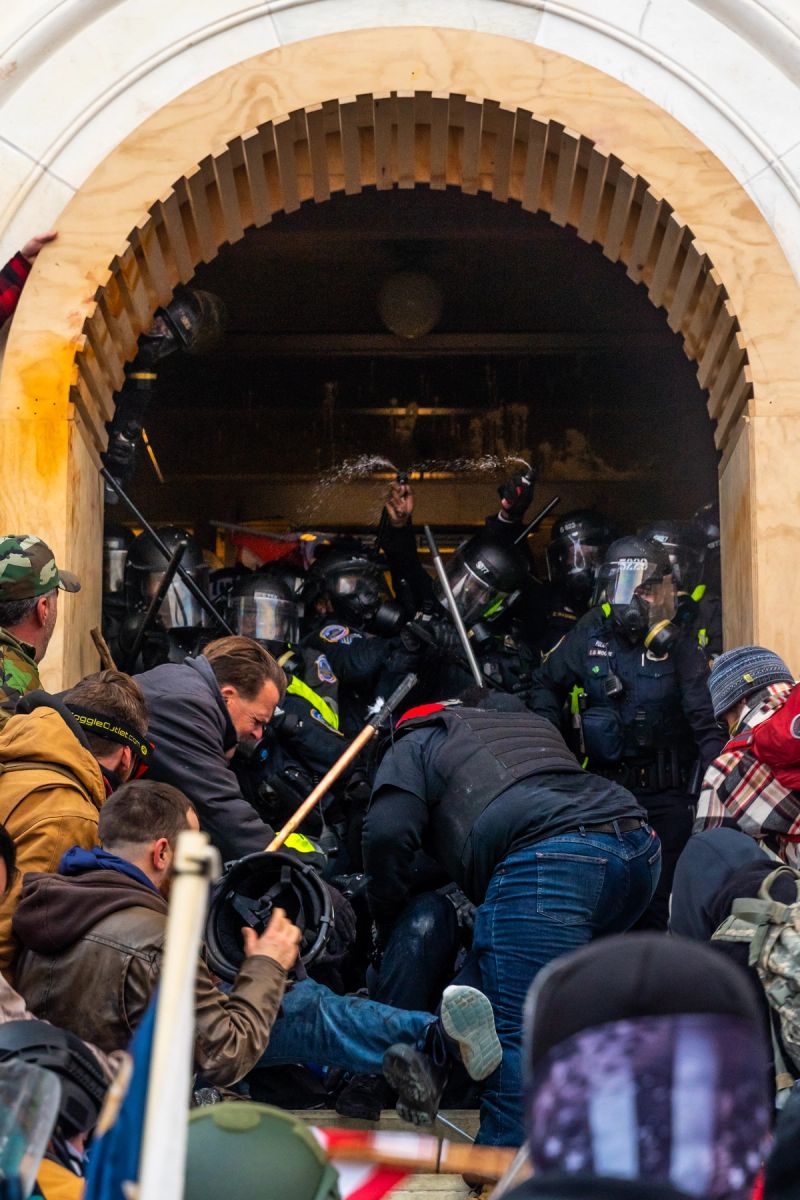
Later in the afternoon I was spending a lot of time in front of an archway entrance with stairs leading up to it. The crowd was so packed that as police pushed back out of that entrance toward the stairs, the crowd began to fall down them. But there were so many people that it was like falling in slow motion, all packed together.
I ended up toward the bottom of an unintentional dogpile, with who knows how many people on top of me and at least a couple below me. I was facing downward. I couldn't move. I was really worried I'd break my leg. I had basically no control over my body, and that was really scary: oh, I have zero control, I'm in danger.
What prompted your decision to leave?
Once I managed to get free, I was taking stock of the shifted environment and heard someone say, "Oh my God, there's a dead woman over there." I'd later learn they weren't talking about the woman shot inside. They meant another woman, who I believe the autopsy said died of a fixation outside on the steps, right next to where I'd been. I didn't see her with my own eyes, but it brought me out of shock and back to reality. I thought: okay, it's time to leave.
I hadn't set a line for myself, like if things pass this line, I have to leave. That clarified it for me.
Around then I saw an older, middle-aged woman limping badly, looking seriously hurt, and asked if she needed help. She did. I tapped some other young man on the back and said, "Hey, help me get this lady down here." We put our arms around her and walked her down the Capitol steps to get her out.
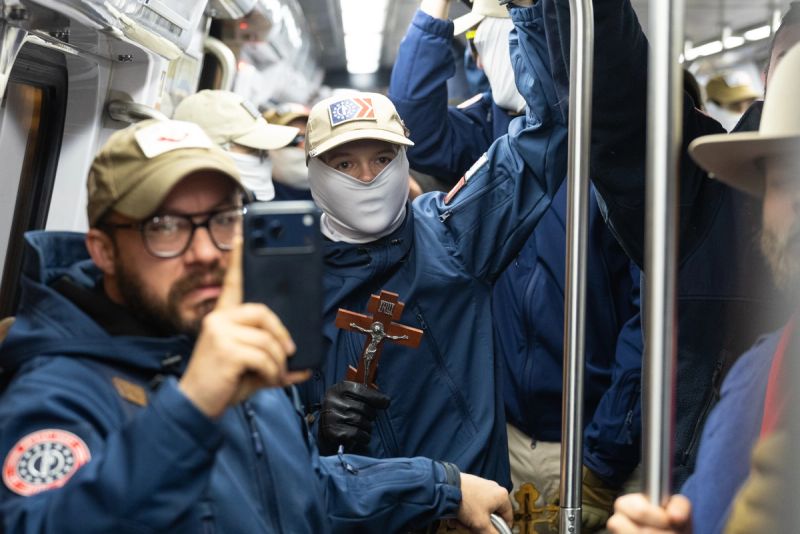
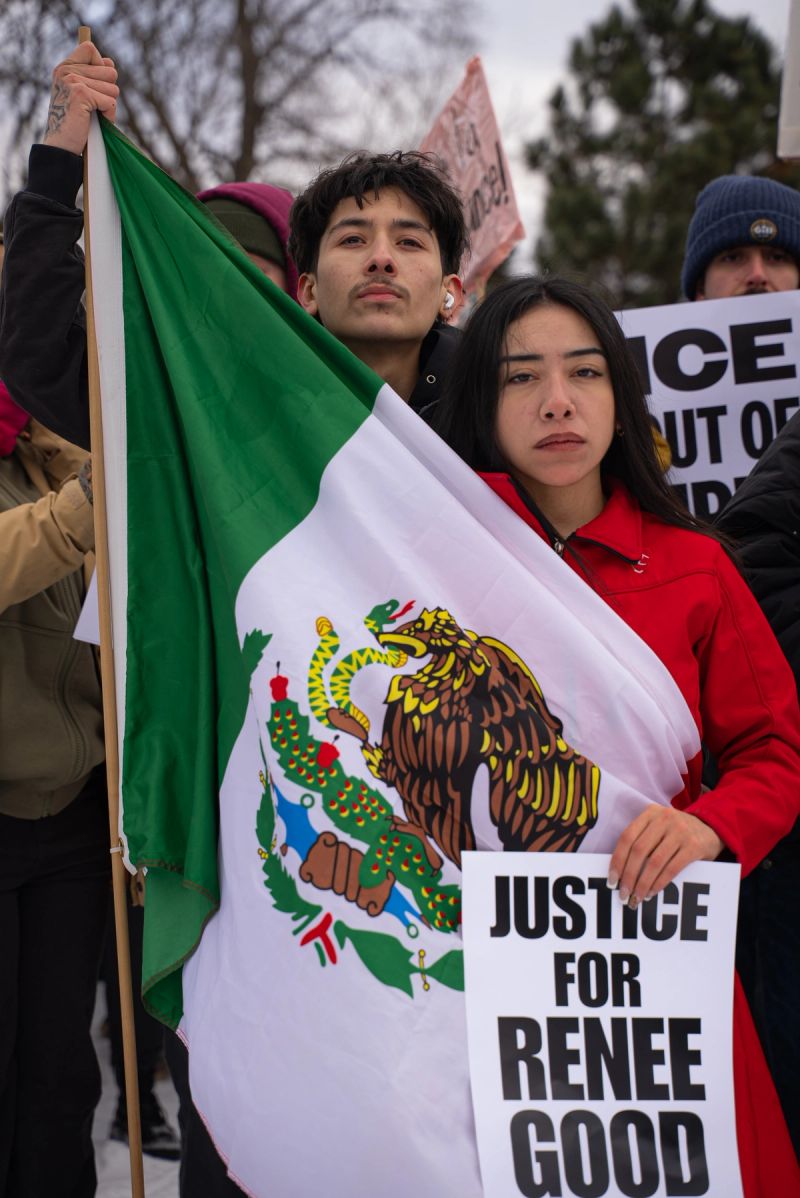
You have since covered immigration enforcement in Minneapolis in January and at Delaney Hall in Newark this past May. What is your state of mind when you are in the midst of such events?
When I'm in the middle of it, my brain is in photography or videography mode. I do have holy-shit reactions, but the overriding response is: holy shit, and then, I need to photograph this so other people can see it, and I need to do it well. So I need to be focused on exposing the image correctly and seeing everything that's happening.
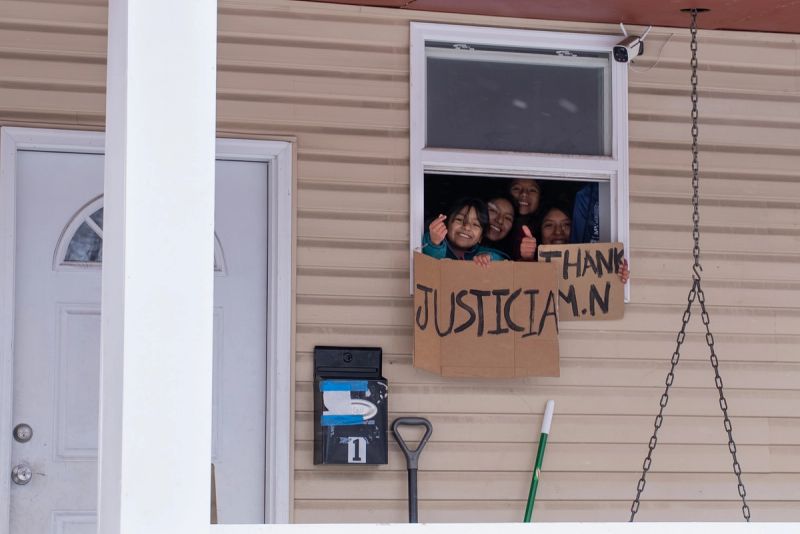
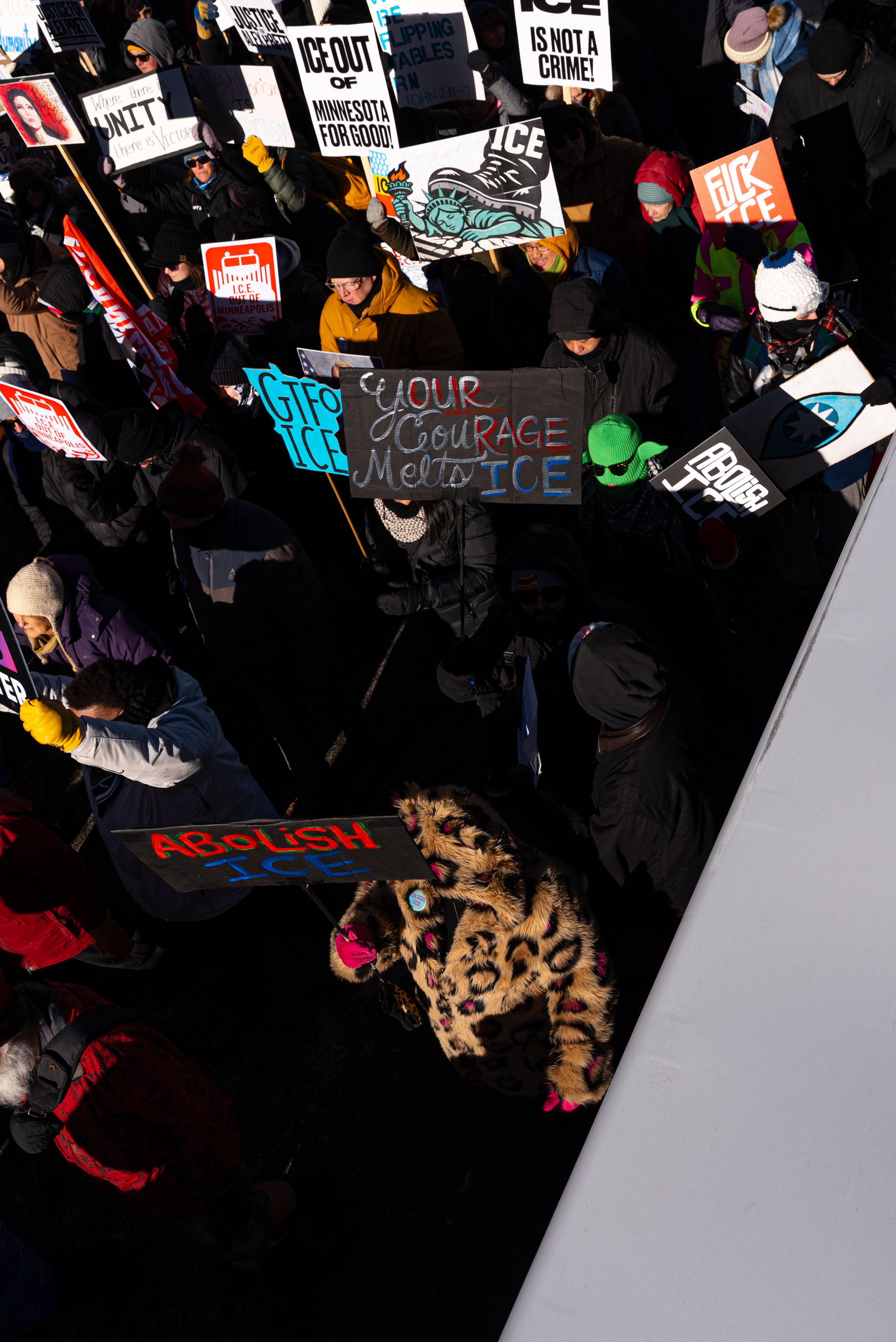
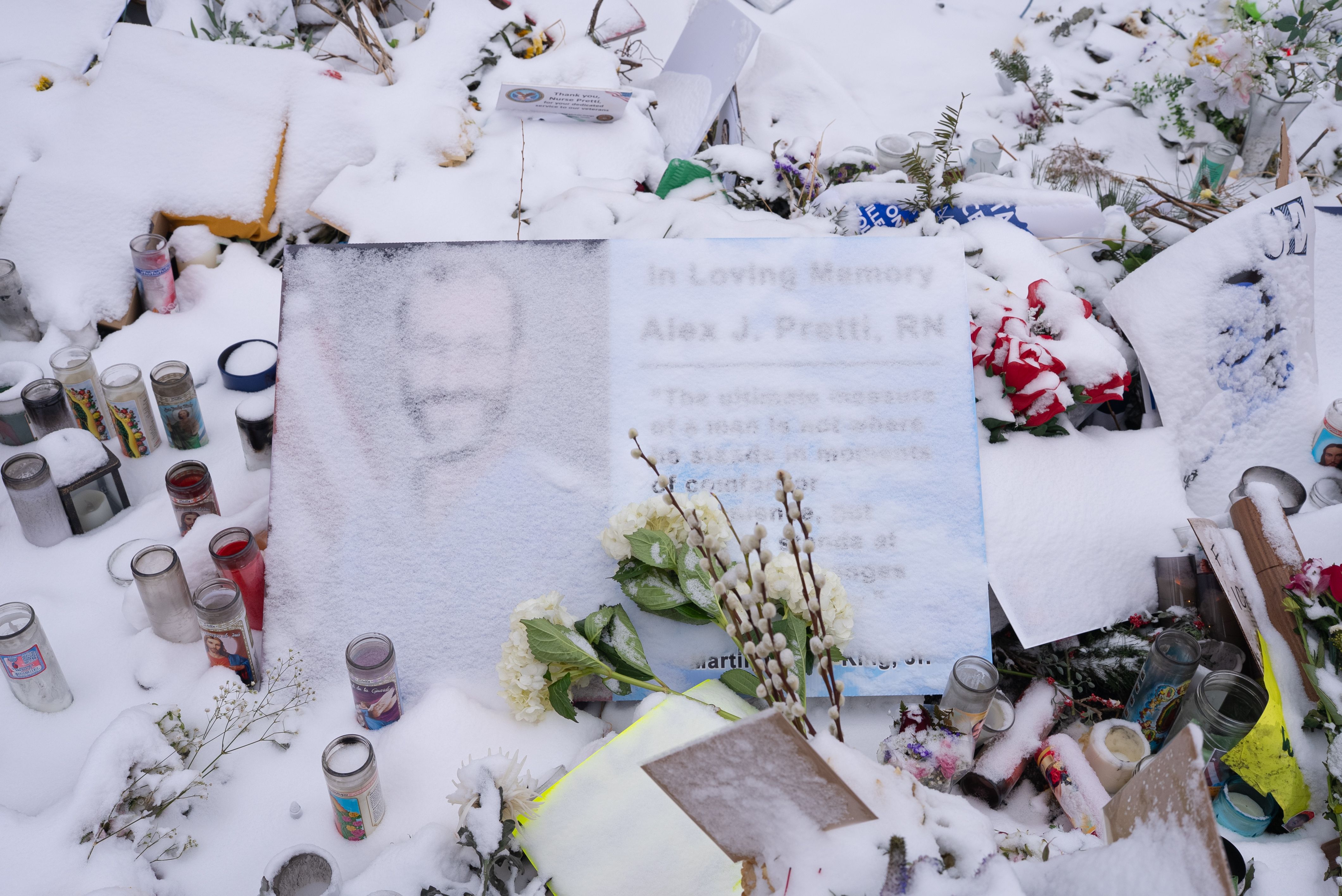
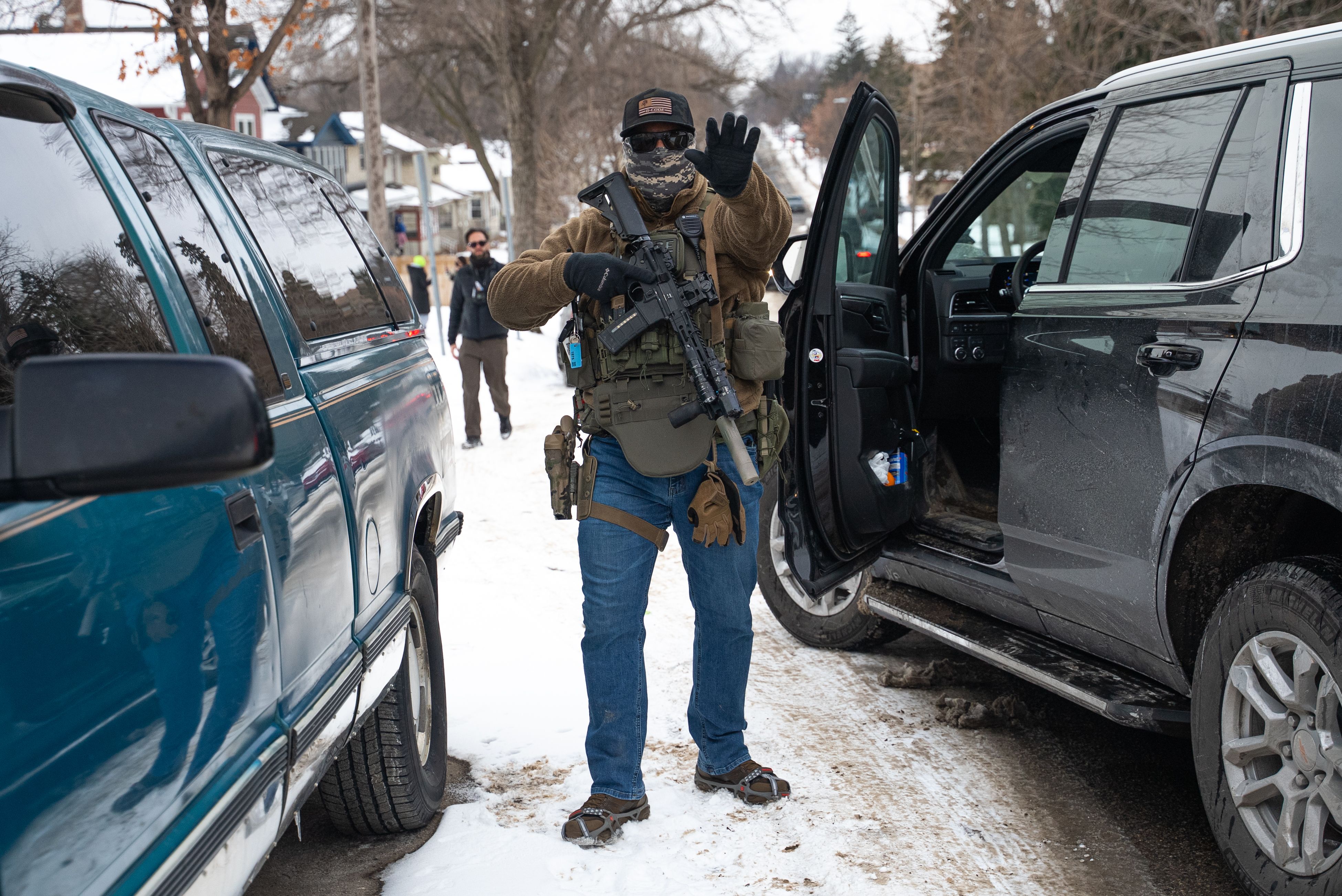
In Minneapolis I was there about two and a half weeks, on and off through January. I got there several days after Renée Good was shot. I'd just flown home to D.C. when Alex Pretti was killed, and I came back the next day. I first went out entirely on my own dime, then got hired in the field for a freelance stint through networking.
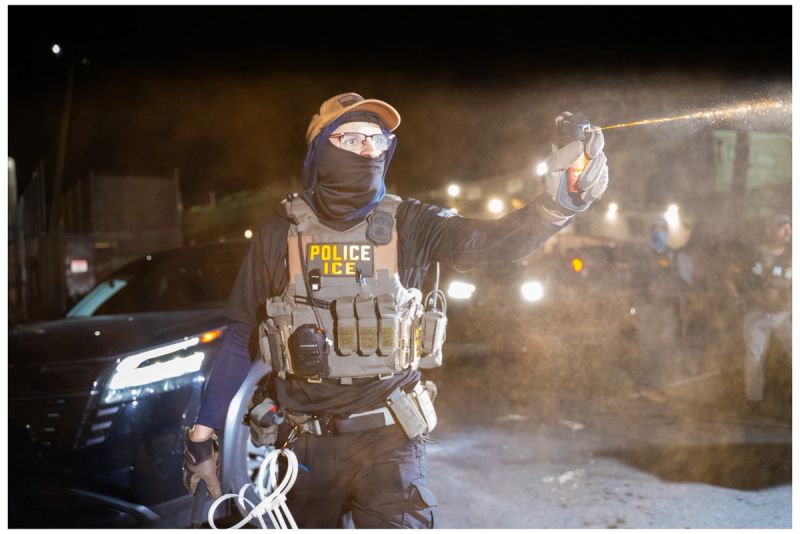
When did the personal toll become apparent?
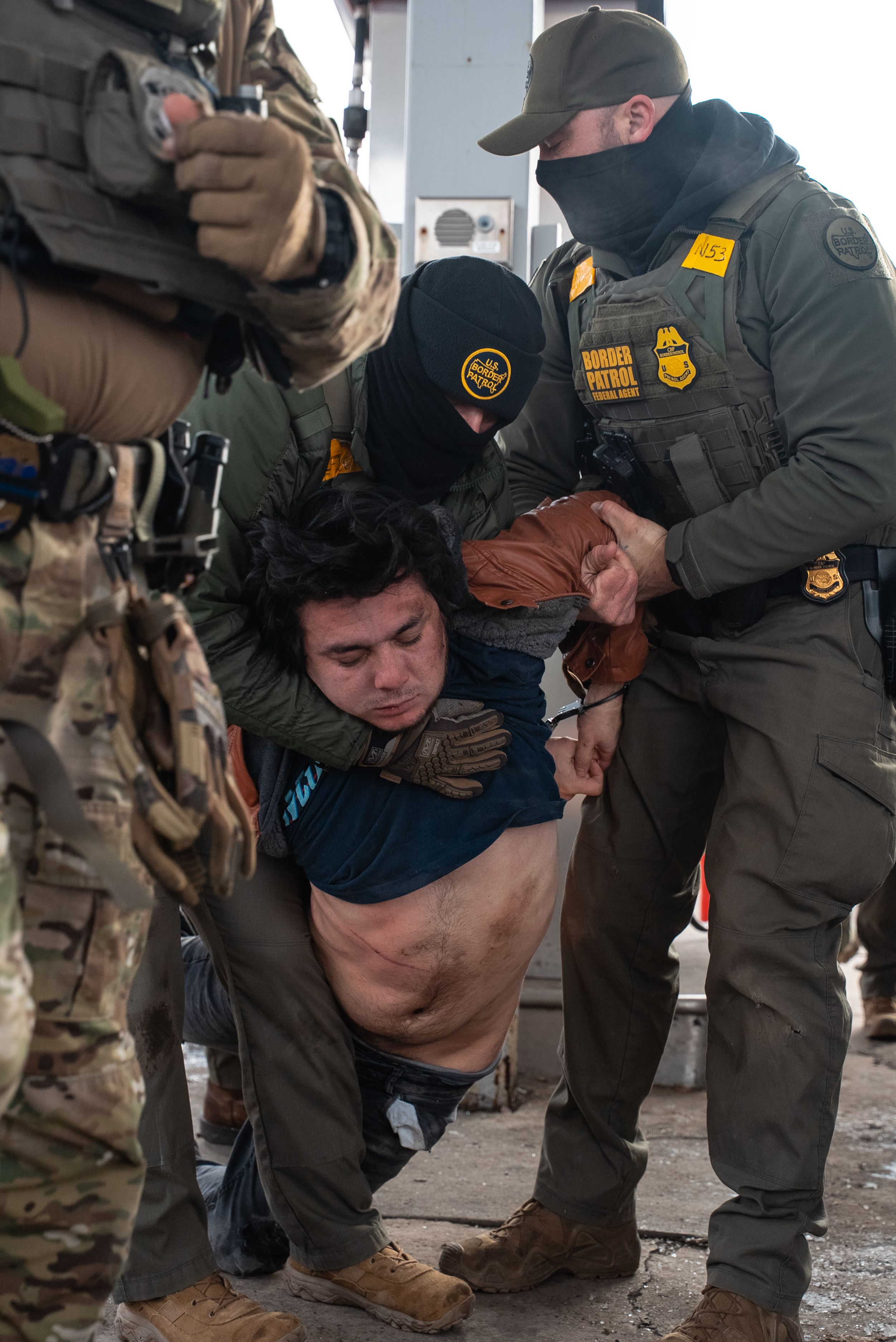
It wasn't until I got home and finished being in Minneapolis that a lot of the weight hit me. I think I was storing up the emotional energy, because it was so multifaceted: the specific acts of violence being perpetrated in front of me by Border Patrol and ICE, and being horrified by that, and then also seeing the nationwide story. Absorbing the fact that masked men with guns and badges, empowered by the U.S. government, were truly roving the city streets of Minneapolis, stopping people at gas stations, knocking on doors, detaining people right off the sidewalk. That's a horrifying society to live in, and that's our society. I was absorbing it without processing it. Once I got home I had to sit with it, talk to my therapist, cry a little, talk to my fiancé. It's a lot to process, and I'm still processing it.
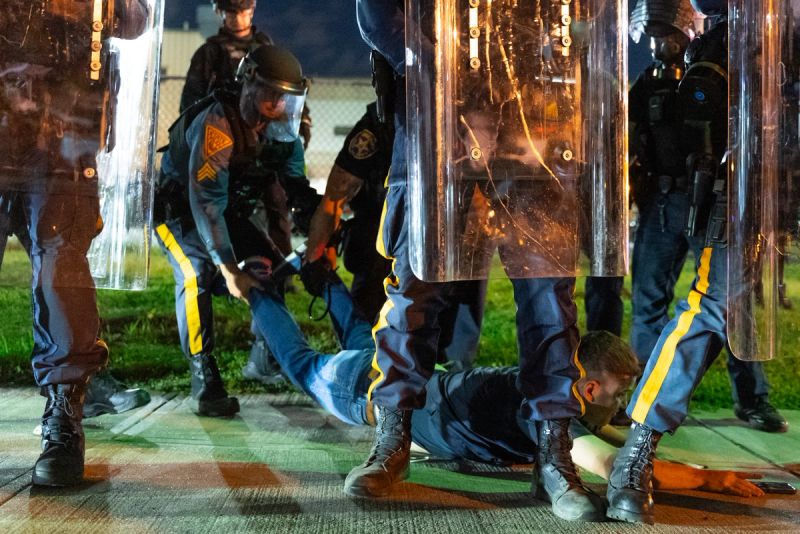
At both locations, the First Amendment became a point of contention. What did you witness?
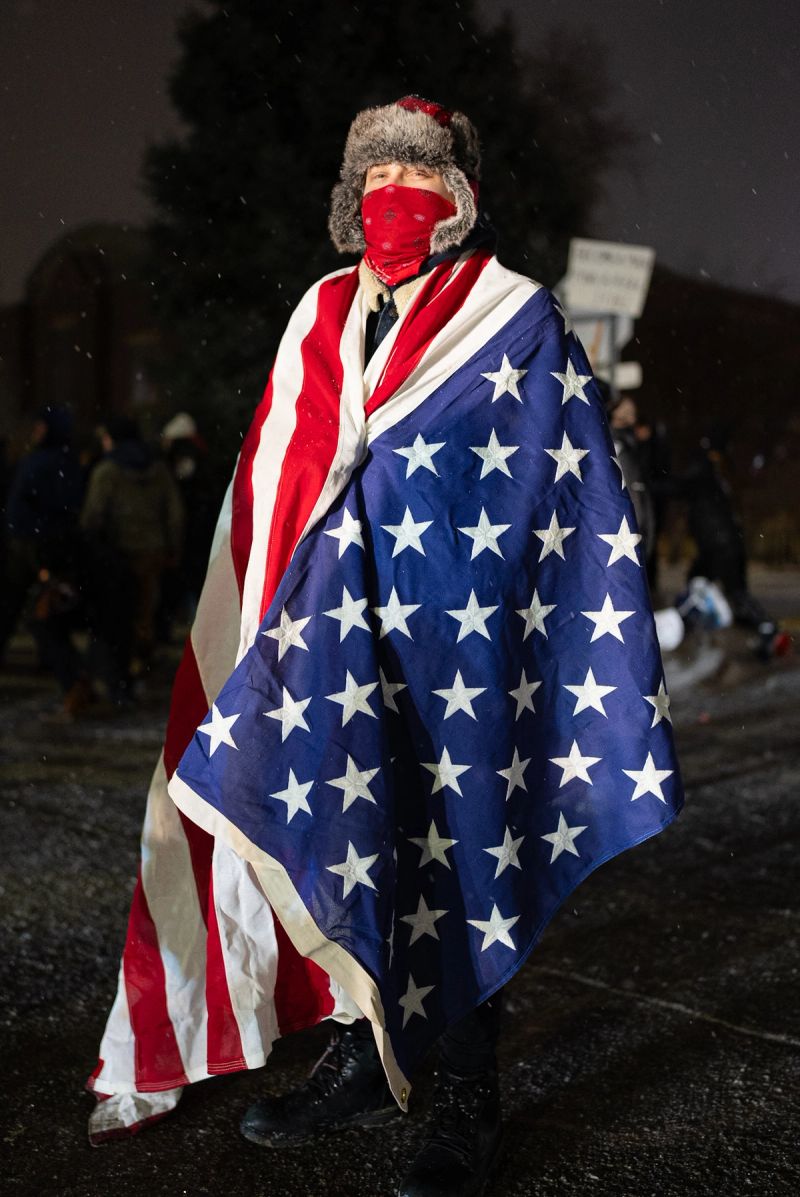
There were these elements of protest: people in Minneapolis organizing against ICE, and people at the Whipple Detention Center, the Whipple Federal Building, protesting outside the gates there and trying to block cars from coming in and out. Similarly, at Delaney Hall in New Jersey, protesters trying to block cars coming in and out, or trying to assemble in public, on the public sidewalk and in the public streets, to express themselves and gather peacefully under their First Amendment rights. And then members of the press, us, being there and not being impeded in covering that.
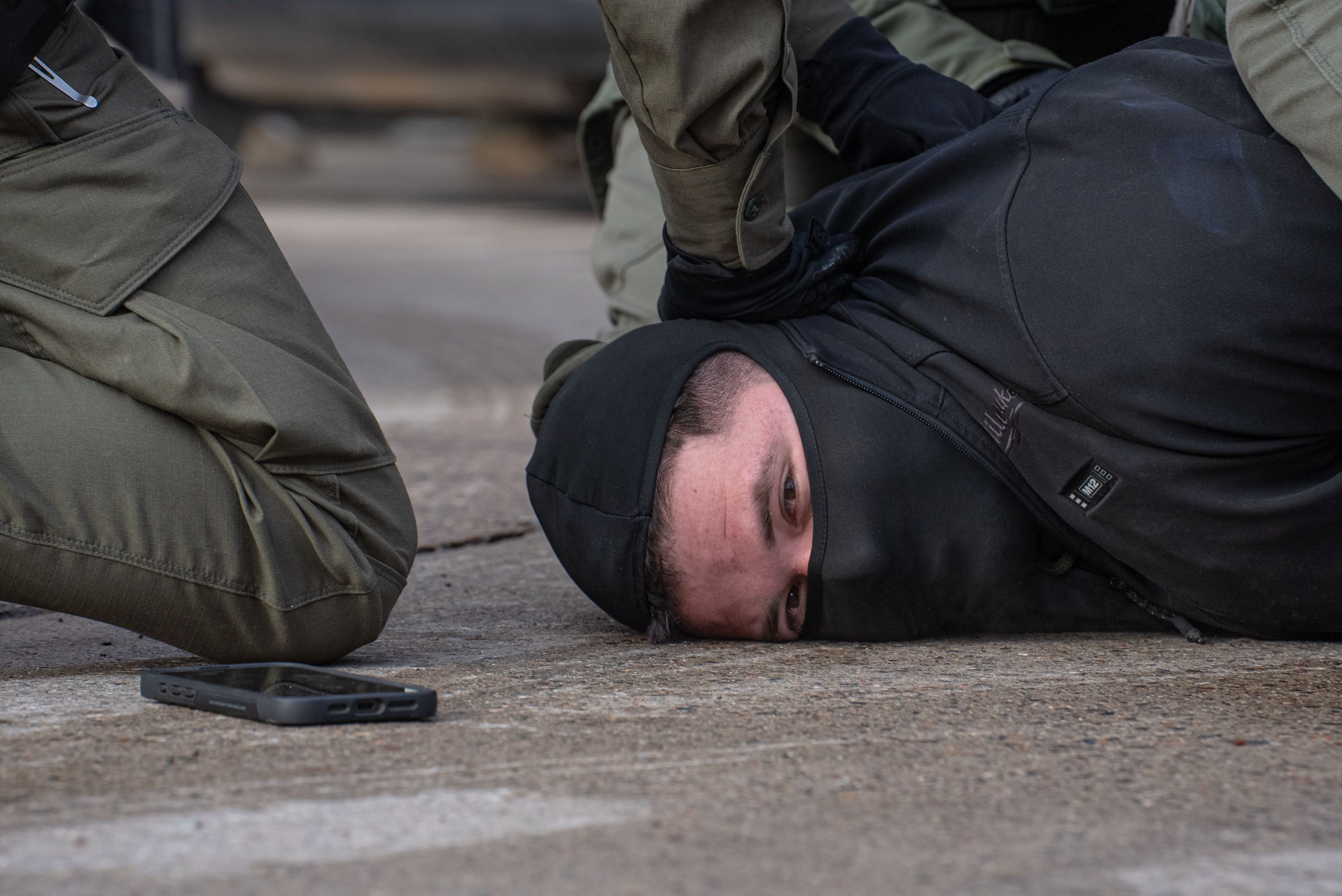
All of those things were called into question. Members of the press were directly attacked by ICE agents.
The government (I think it was mostly state police in New Jersey) tried to establish a fenced-in zone referred to, colloquially, as a free speech zone. Basically: if you're inside this zone, you can protest. The problem is that implies that outside the zone, you no longer have the right. I understand there are limits. You can't yell fire in a crowded movie theater. But this was clearly a protest at a relevant facility.
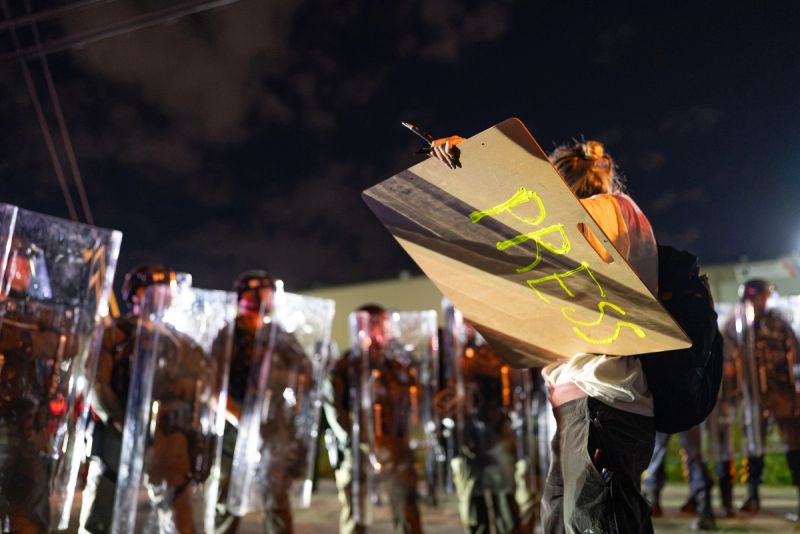
Critics contend that no rights were violated. They argue that protesters may not obstruct federal agents or block active roadways, and that the protesters provoked the confrontations. How do you respond?
I don't have the answers to what ultimately is or isn't lawful. Those are cases that maybe need to be ruled on by the Supreme Court, and I don't have a great deal of faith in that institution anymore. I can tell you my opinion.
Look back at the civil rights movement, one of the most widely lauded periods of civil disobedience. People love those signs, the phrase "good trouble," quoting John Lewis. The people protesting at Delaney Hall are, in my mind, totally validly expressing their First Amendment rights. It is a valid act of civil disobedience to sit in the street and block traffic, to sit in front of a federal facility and try to impede the actions of ICE that you disagree with. You might get arrested for it. That's a risk a lot of protesters understand.
But there's a way for police to conduct that interaction that carries responsibility, and in an ideal world, more respect on behalf of the police and the arresting parties: not throwing punches, not using pepper spray. There's this totally accepted governmental use of what are essentially chemical weapons against American citizens to encourage them to stop expressing their First Amendment rights. I think that's so misguided.
What's happening on the ground that is not being reported?
A tiredness on the part of regular Americans. We've been getting riled up by national media, by politicians, by people in power, to extract value from us, monetarily or to get our votes, to keep us engaged. I don't think that's reported, because the big outlets want to keep people feeling agitated and angry.
People are tired of feeling so angry at their fellow citizens. When I was interviewing people for that documentary project a few weeks ago, through the America 250 events here in D.C., one of the questions I would ask them was: how do we heal the divide? One of the most consistent answers was something along the lines of, "We just got to talk to people." A lot of people said it surface-level, but it's correct. And very few people actually go talk to people they don't fully agree with. We're interacting on screen so much. I'm guilty of it myself.
It was so valuable to me, not just as a journalist but as a regular person, to talk to people I didn't share most political beliefs with, because I was hearing them tell me what they believe and why, not a generalized belief through a poll on CNN or Fox. It wasn't uncommon for me to find respect for a belief I disagreed with, because once I asked follow-ups I could see what values it was rooted in. And then I could say back: I disagree that that's how we should handle it, I think we should take this approach.
The powers that be, governmental and oligarchical, have a vested interest in the left-right framing. The real divide in this country is top versus bottom. And the sooner we can see that as a whole country, the sooner we can refine those things we have in common. Everybody wants their family safe, their kids educated, a steady paying job. People want to work. My true belief is that people want to respect themselves, and they want to work hard, and they want to support themselves. Laziness is rare.
What would you ask of readers?
Don't just say we have to talk to each other more. Be the person who goes out and has the conversation. It doesn't need to be formal. It doesn't mean you need to go out and interview people with a camera. No one is going to create the forum for you. That has to be an individual effort, one on one.
Will Allen-DuPraw Biography
Artworks by Will Allen-DuPraw
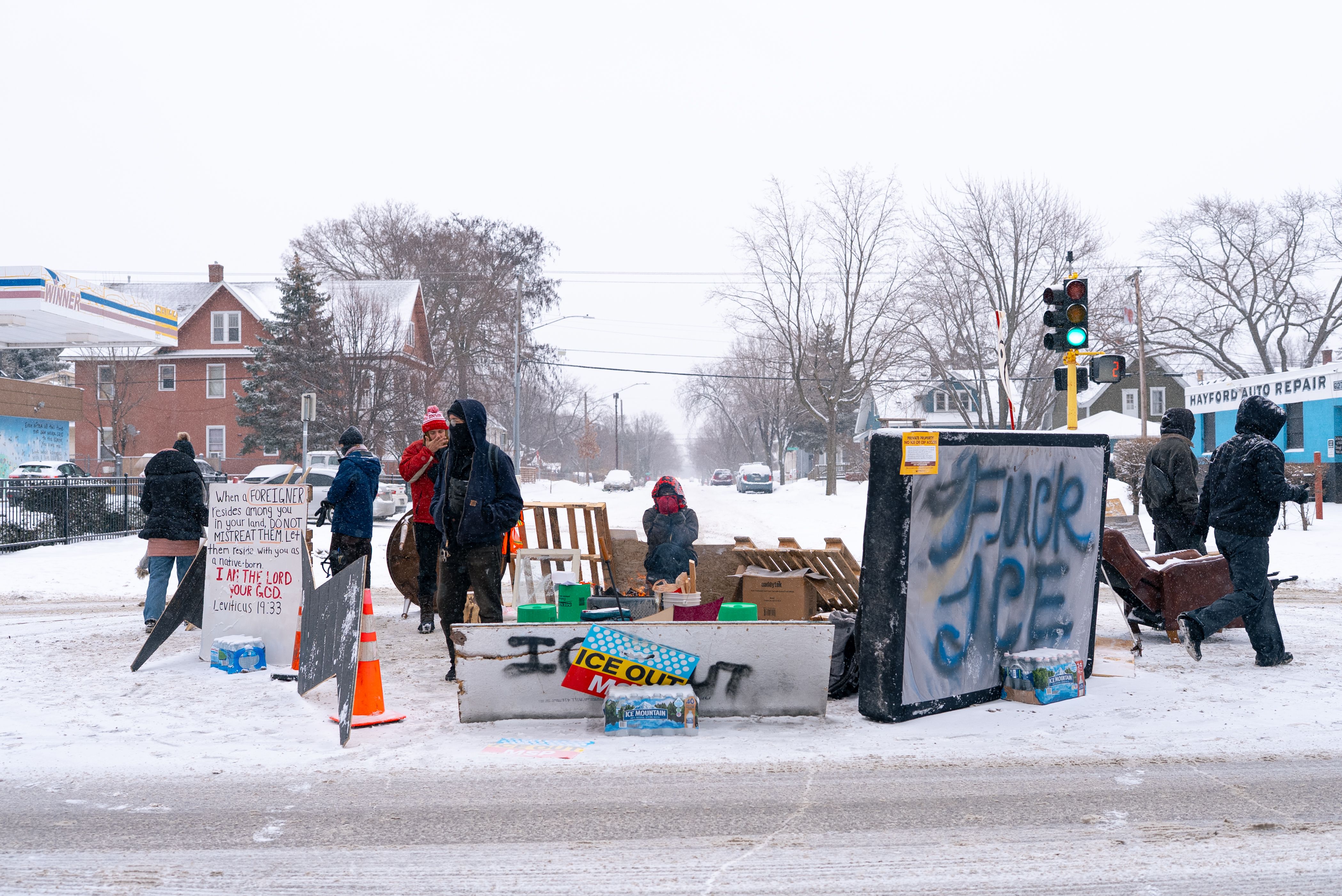
Will Allen-DuPraw, Checkpoint, South Minneapolis, (2026), 12×8 in, Photography Archival Pigment Print
Stories

STAY UPDATED
Sign up to be the first to find out when new stories and merch drop on THROAT. We respect your privacy and will never share your information with any third-party vendors. For real.