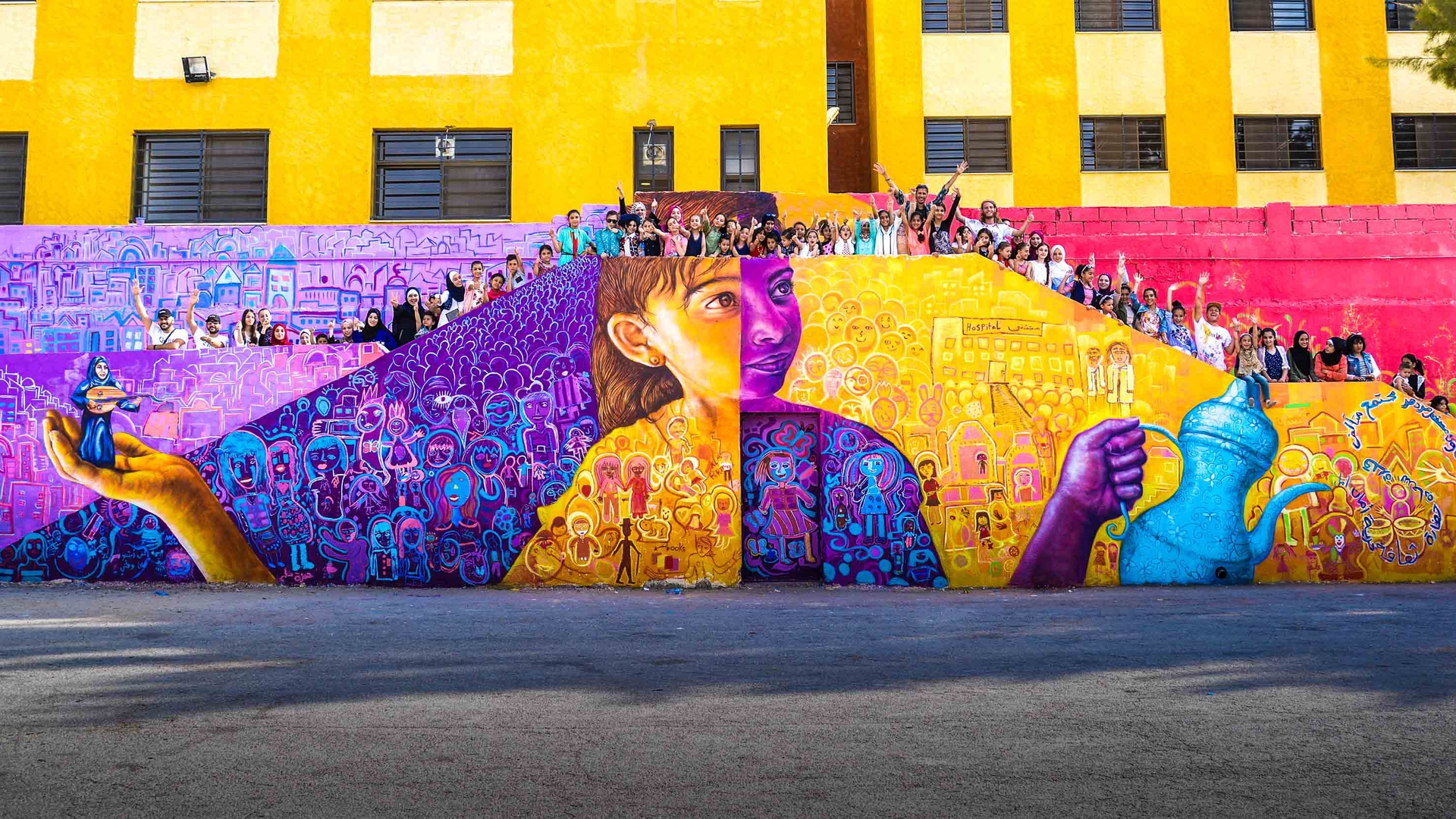
Nomadic artist and educator Joel Bergner, also known as joelB, is best known for his expressive, brightly hued murals centered on issues of social justice. Currently based in Washington, D.C., he recently brought two large, vivid works to Bushwick.
Transforming Lives with Collaborative Art: An Interview with Joel Bergner
Author: Ryan Thompson
Can you describe your approach to collaborative art projects? Walk me through what a typical project looks like.
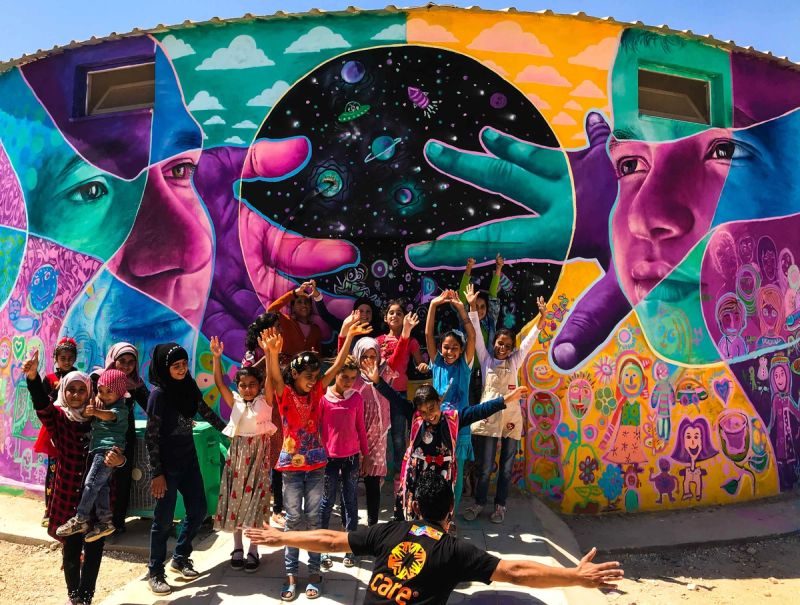
Let's say we're in a refugee camp. A lot of our programming is in refugee camps, in places like Jordan, Bangladesh, and Uganda.
Imagine a young girl named Joy. She is 10 years old, from South Sudan. She can't be in her country because her family has fled due to the war. And so here she is in a refugee settlement in northern Uganda. There's not a lot going on for her. She goes to school, but there are 100 kids in the classroom. A lot of them have gone through trauma. They've lost loved ones. Just a really difficult childhood.
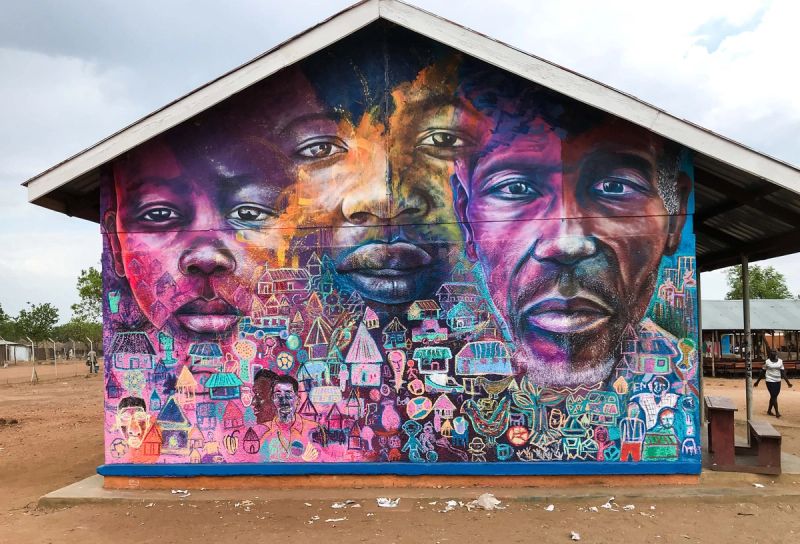
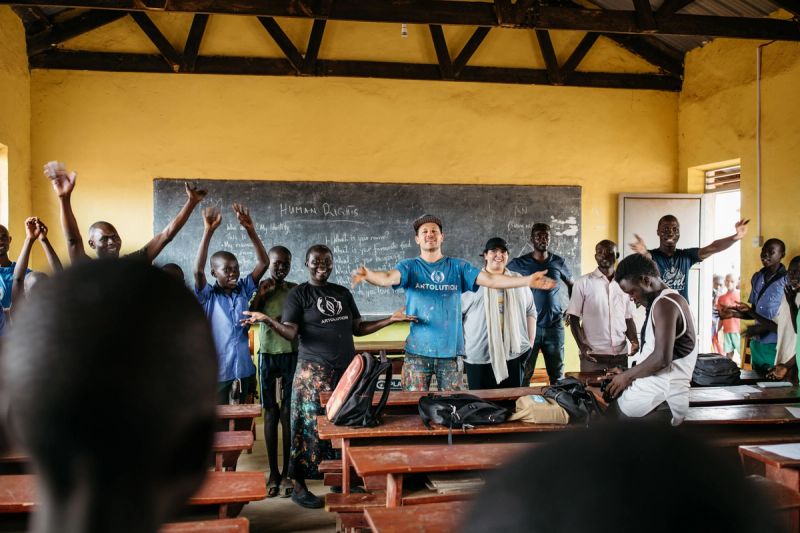
One day, this group of artists — Ugandan, South Sudanese, people of different ethnicities — come to her school. And so Joy goes to the workshop, and the artists tell the kids, “Hey guys, we're going to do a big mural. What is the message you want to send to the world? What do you think is important in your community?”
Joy and her friends start to share some ideas, while the artists write all the ideas on the board. “Okay, guys, let's turn these into pictures.” So everyone gets paper and starts drawing all their ideas. With all the pictures up on the wall, they ask “What really stands out to you? What do you think would work in this mural?”
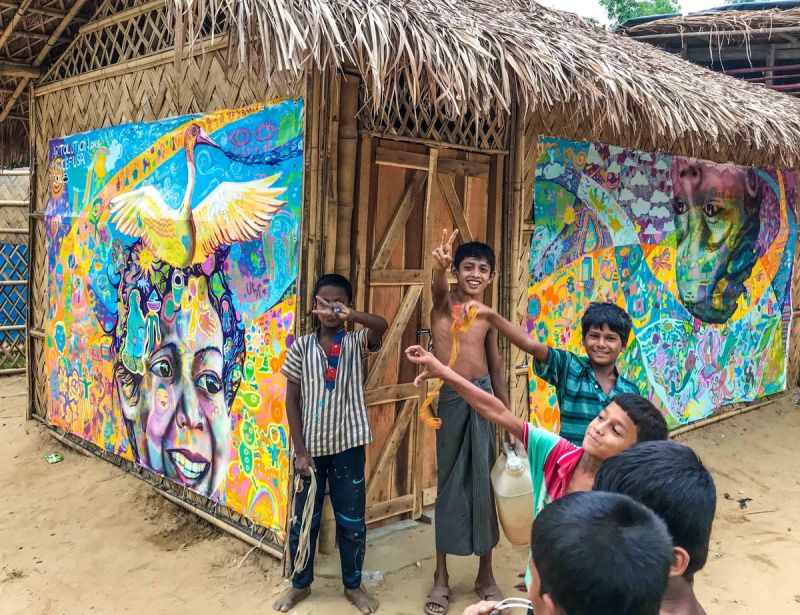
Joy goes up to the wall, and she's like, “Oh, I really like that one,” and then she explains what it's about. Each of the kids shares their ideas, while the artists sketch them out. By the end of that session, they have an idea.
And while they’re doing this, they're playing games with the kids and singing songs. They're getting in a circle and having fun. These kinds of activities are crucial to the process. We always focus on getting kids out of their bubbles. They're feeling shy. We want them to build connections.
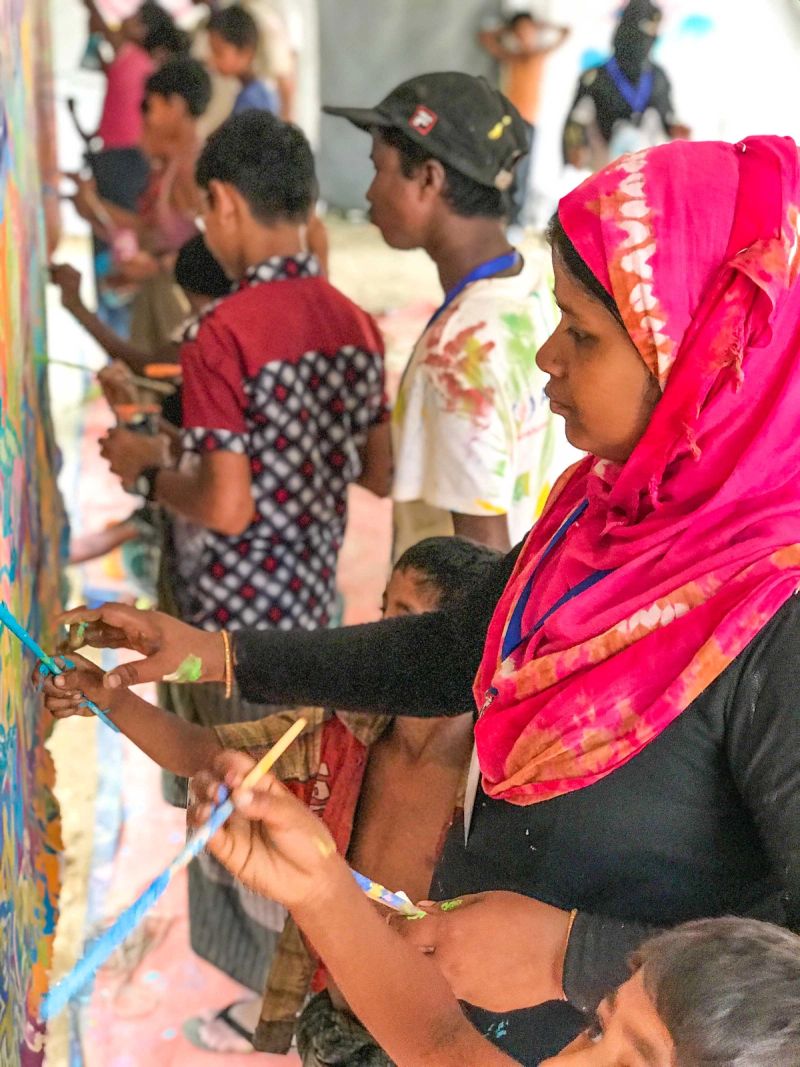
The artists come back several days later, and they say, “Okay, we took your idea and we started making a more finalized design. Now we're going to paint the background of the mural. Everyone gets big brushes and starts painting.
And once that's covered, they get into the more creative part, which is actually painting their ideas — their hopes for the future, dreams, the things that are important to them. Joy decides to draw her auntie, because she's raised her after her parents passed away. The facilitators give the kids a workshop on portraiture, and then Joy gets some paint down on the wall.
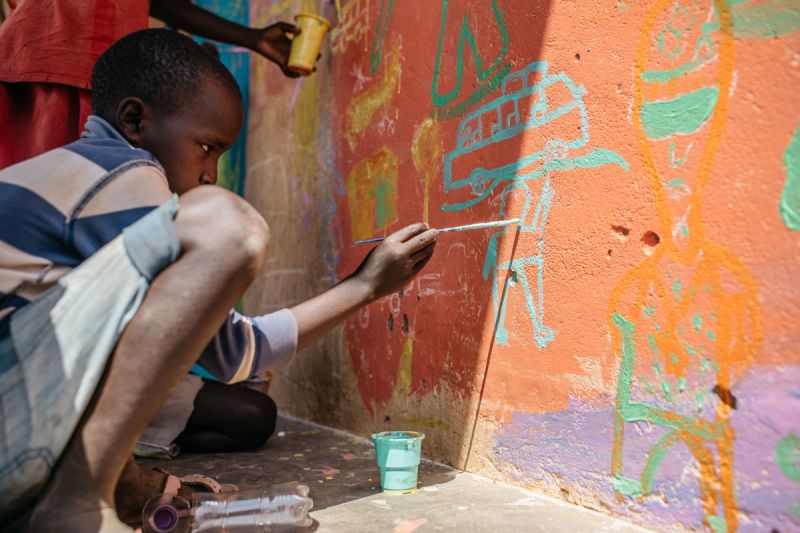
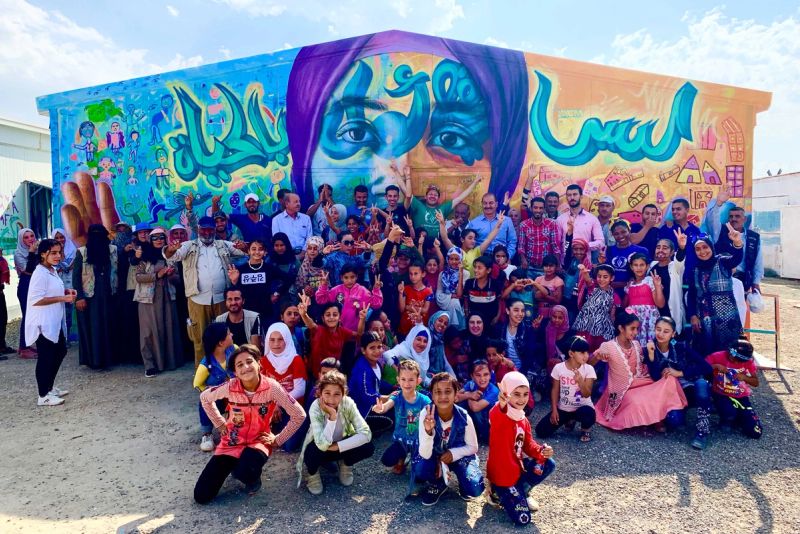
And so this goes on for a week or two. By the end, you see these bright, beautiful murals. When you look closely, you're seeing dozens of expressions, all these little paintings from each participant. And then you stand back and you see the full piece, which is a cohesive, beautiful work of art.
Joy is really excited, saying, “wow, I can't believe this beautiful thing, I actually participated.” When friends or families see the murals, she's like, “Hey, I painted this one here. And this one, too.” She really feels proud that she was part of this process, that isn’t just a ‘paint by numbers’ thing.
At the end, they have this giant celebration. Some local officials come, with musicians, speeches, and a dance. Joy sees all these people coming out for her, cheering and clapping and saying, “Great job, kids!”
Now she has this feeling of, “Wow, I really contributed to this. I am proud of myself. I'm proud of my peers. We did something that mattered. People are actually paying attention to what we have created and what we have to say” — which is something that maybe Joy has never experienced before.
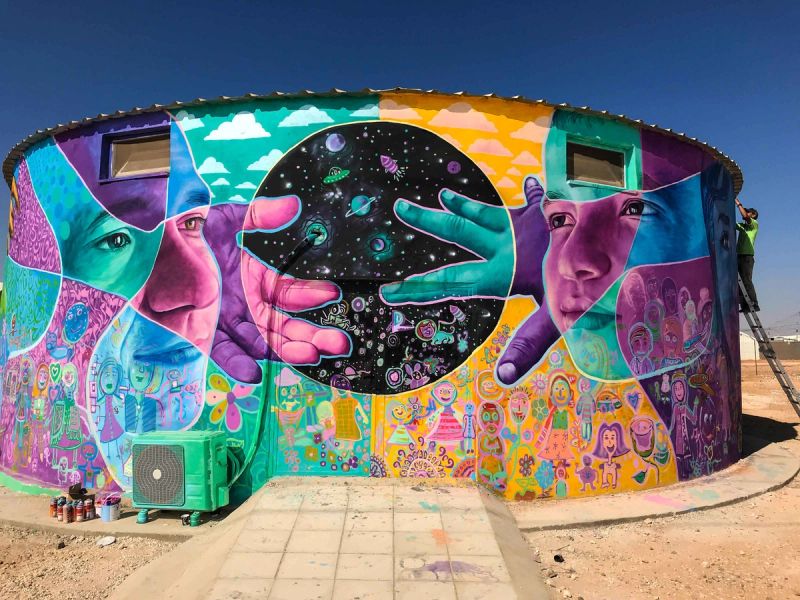
You work in vulnerable communities. How do you adapt the approach for different cultural contexts and experiences of trauma?
It is very important to be very aware of the local context. As you said, people have gone through trauma. There are a lot of cultural issues. So you have to just be really sensitive and take the lead from the local community. One of the main ways that we do that in our projects is to work with local artists to help implement and facilitate.
You also want to know when to push the boundaries and when not to. I always think that outsiders should not push boundaries, but if locals want to do so, then we should support them.
I'll give an example of that in a very conservative community in Jordan. We were doing a series of projects where we brought together Syrian and Jordanian kids. One was at a girls high school, working with teenage girls on different arts activities, digital art, as well as a performance.
Our lead facilitators explained that this is a really conservative community. It is taboo for girls to dance, especially in front of men. You have to be really aware of those kinds of things.
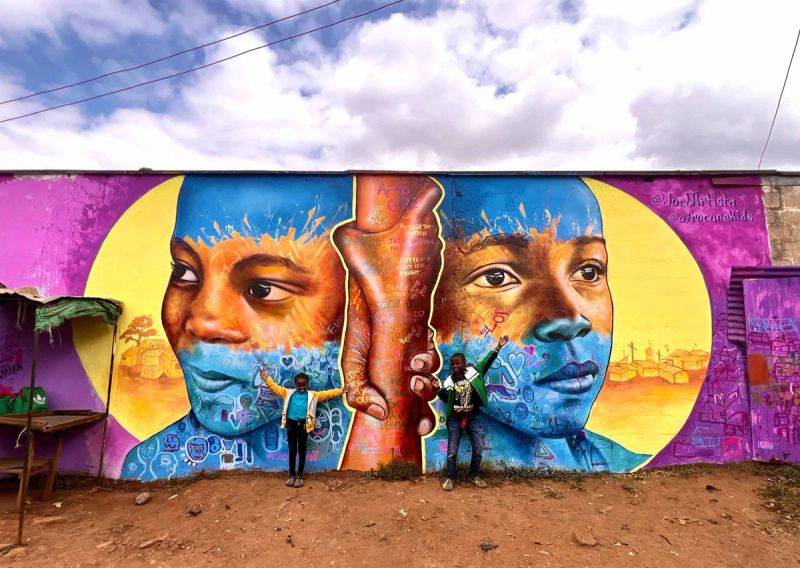
The girls came up with a story for a play they wanted to do. There was one scene where they wanted to do a dance as part of the story. So these teenage girls took the lead and said, “we want to do this dance in the play.” We didn't quite know how it would go over.
On the day of the performance, they got up on stage and they did their play, and it was really great. When they get to the part where they dance, suddenly three men jump up and run to the stage and try to stop it.
The local artists that were up there, who were Jordanian, started talking to the men, and they said, “Hey, let them continue.” And they did manage to finish the play. I don't even think the girls knew until later that they were trying to stop it, because they had gone to the back and they got kind of intercepted by some of the facilitators.
This is an example of the kinds of boundaries being pushed in any society. There are always things that younger people might want to do that the older generation disagrees with. We find that art can sometimes bring those topics up.
What are some challenges that Artolution faces?
So the biggest challenge is always funding. Our primary objective is to have long-term, ongoing programming in any community that we're in. We're not interested in just going somewhere, doing a project, and leaving.
Before we started the organization, that is what we did. But we realized that if you really want to make an impact, you have to have long-term engagement. But long-term funding is much harder than getting just one project funded.
A second challenge would be to get the right kind of people to buy into this and see the vision. We do monitoring and evaluation for every project and so we have a lot of data. We're really trying to find out what kinds of projects and what kinds of activities are going to have the biggest impact on mental health and wellbeing of the participants.
So we want to get the right kind of funders that share this vision. For example, some funders might say, “We want you to reach dozens of these different community centers and schools, all of these kids, and within this budget.” But that means that we’re going to work with each of them for only a few days. Based on our data, if you only work with kids for a few days, that will have a small impact. But to make a bigger impact, you really should be working with them for at least several weeks or months.
A third challenge is that the artists we work with, a lot of times, really just want to make art. That's fine, that's beautiful. They want to make art; but this is not just making art. So first of all, you have to find the right artists. Even when you find them, though, you still have to remind them that it's about the experience of the participants.
Of course, you want people to say, “Wow, that's really beautiful. I love this work of art.” But that's not the primary goal. If you're trying to make the mural really good, you can't lose sight of the more important goal, which is the social goal: making an impact in the lives of these kids.
Are there any other distinctions between how Artolution works, for example, how it addresses mental health needs that maybe other interventions miss?
I think most organizations that use the arts are locally based. For us, we try to take advantage of the fact that we have a global network, that we have these programs in different countries.
For example, we've done some virtual reality art-making experiences, with participants around the world. One project was a partnership with UNHCR, so we had refugees living in Indonesia, Uganda, and Czech Republic — three very different regions, very different countries, with people from different places, right? Czech Republic, a lot of Ukrainians, some Syrians as well. Indonesia was like a lot of people from Bangladesh, Pakistan, and Afghanistan.
So we got them all together. They did regular projects, like murals. They also learned digital art, skills related to digital design, things like that. The really innovative thing was they learned how to create three-dimensional virtual reality art. They put the headset on and they’re creating new worlds. They can create a forest, a city… they can create anything, right? It's a really cool experience.
They all have these avatars they've created. In this virtual space, they get to ask each other questions, like “what's life like in Indonesia? How's it going over there?” They put on their headsets, and they actually meet each other in this virtual space, and they can, they can talk to each other and create art together.
The main woman who got partnered with us for UNHCR is a mental health expert. This kind of project has never been done. They consider this an innovation that needs to be studied. So we're doing some monitoring and evaluation, trying to find out how impactful these kinds of interventions are.
So these are the kinds of things that we're experimenting with. We always want to be pushing the envelope. We always want to be finding new avenues for using the arts to benefit people, so I think that's something that distinguishes us from a lot of interventions.
For more information about Artolution and their projects, check out:
Stories

STAY UPDATED
Sign up to be the first to find out when new stories and merch drop on THROAT. We respect your privacy and will never share your information with any third-party vendors. For real.