
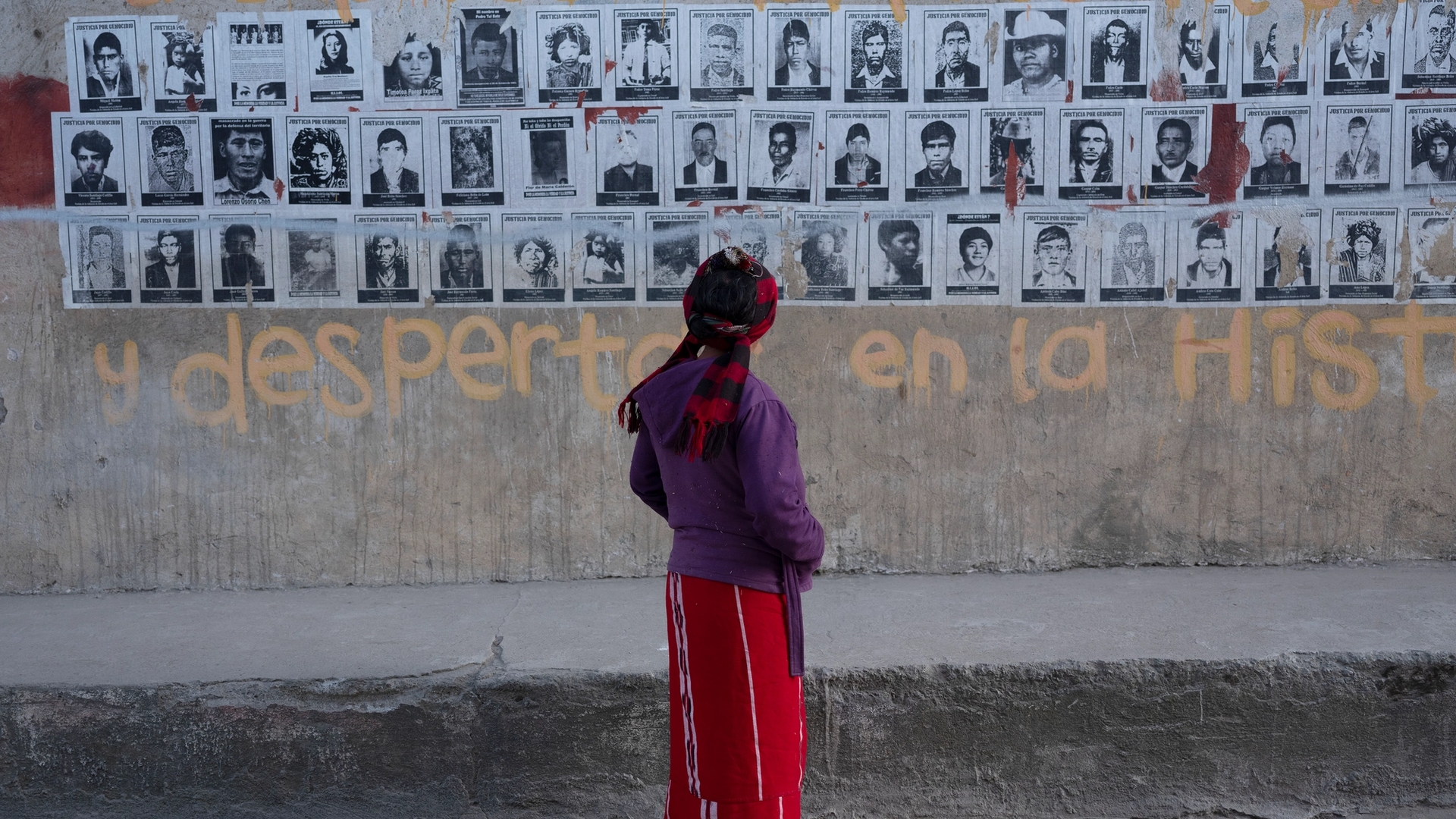
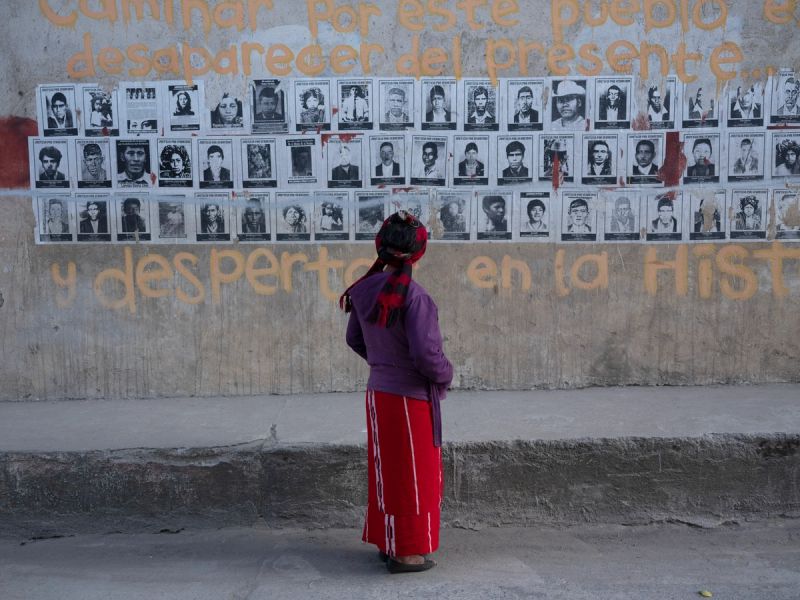
An Ixil Maya woman looks at pictures of disappeared civilians on a wall in Nebaj, Guatemala, January 5, 2019. Over 240,000 civilians were killed in Guatemala's 36-year civil war and 45,000 people were forcefully disappeared and never found. © Nickelsberg
Central America, The First Break
Author: THROAT Staff
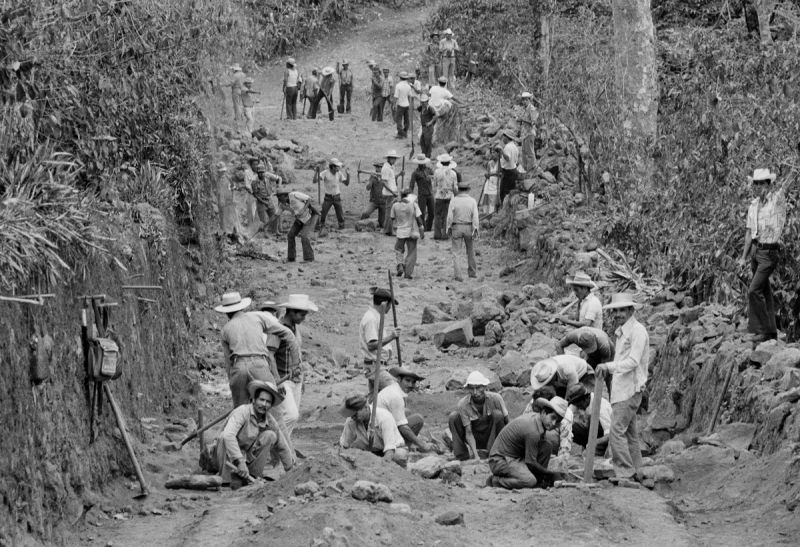
What took you to Costa Rica in May of 1979?
I had an interest in Nicaragua as the civil war started in 1978 or 77. I was living in Washington, D.C., working on Capitol Hill, taking pictures freelance, selling a picture at a time. If you've spent summers in Washington, you know how miserable and humid they are. I said, I've got to get out of here. In May of 1979 I flew to Costa Rica. The Sandinistas threw [Nicaraguan President] Samoza out, or he left, the next month. I had gone to go up north to the Costa Rica–Nicaraguan border because an ABC cameraman had just been shot and killed in Managua, and all journalists had left. I was there with a French photographer who told me call Newsweek, they might take your film.
What happened at Peñas Blancas, on the Costa Rica–Nicaragua border?
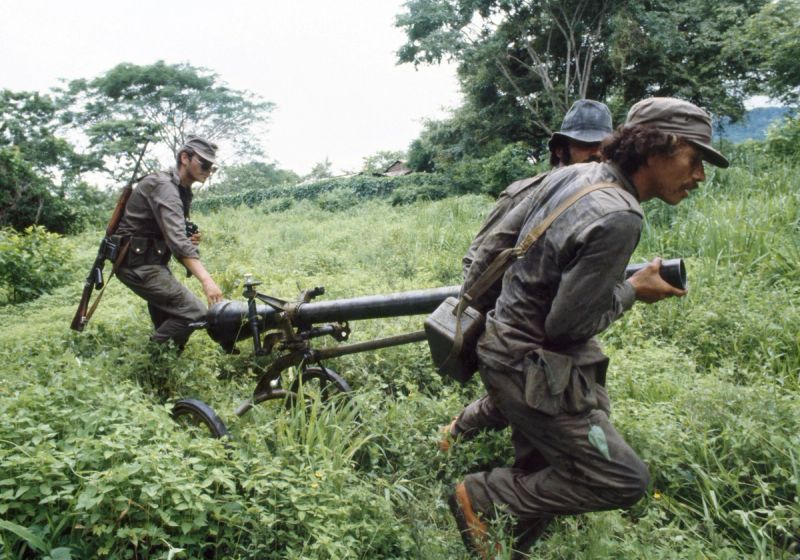
Eight Cuban soldiers came out of the woodwork at the Costa Rica–Nicaraguan border. Eight, in uniform. They had been training Sandinistas in southern camps of Nicaragua. The big boogeyman at this time for the government was: the Cubans are coming, they're training, they're communists, we have to stop them. Where are they? Nobody had seen them. But when they attacked, the Sandinistas came out of their camps, eight Cuban soldiers leading them. The group I was with was a Venezuelan TV crew, three very experienced, and a French photographer from Gamma Paris photo agency. As the Cubans came out of the jungle right at the border at Peñas Blancas, I went, whoa. There they are. I ran backwards and photographed them as they came up the embankment to go to the Pan-American Highway. They were moving a 90mm recoilless rifle. In the background, sitting there with their eyes wide open, were the Frenchman and the three Venezuelans, in my picture.
Every photographer had left Nicaragua. Did the absence of other photographers create an opportunity?
The French photographer told me to call Newsweek. They wanted the film, and I sent it up. They were the only publication in New York that had fresh film from that civil war, even though it was from the south, not in Managua. There were no photographers in Managua because they all fled. Newsweek bought the film.
The Newsweek coverage opened a door at Time magazine. Can you walk us through the opportunity?
I had come across a neighbor from Tribeca, a photographer for Time magazine, Harry Mattison, who was leaving El Salvador. He had been based there and wanted to leave and move to South Africa. Maybe I could take his place? He had already seen the Newsweek coverage I had done. Harry was a contract photographer for Time. Harry recommended me to his editor on the international desk, because Time was regularly doing stories on a weekly basis from Latin America, particularly because of the news coming out of Guatemala, Mexico, Cuba, with the Panama Canal having changed hands, Pinochet in Chile, the Dirty War in Argentina.
THE AMERICAN WAR IN CENTRAL AMERICA
I arrived in El Salvador as a Time magazine photojournalist in 1981, about a year into the country's armed conflict. I photographed guerrilla insurgency movements in the countryside and counterinsurgency efforts by the Salvadoran military and their United States advisors. I stayed through the end of 1984 and observed daily life amidst the brutality of organized death squads and state-sanctioned violence against social, labor, and clerical movements.
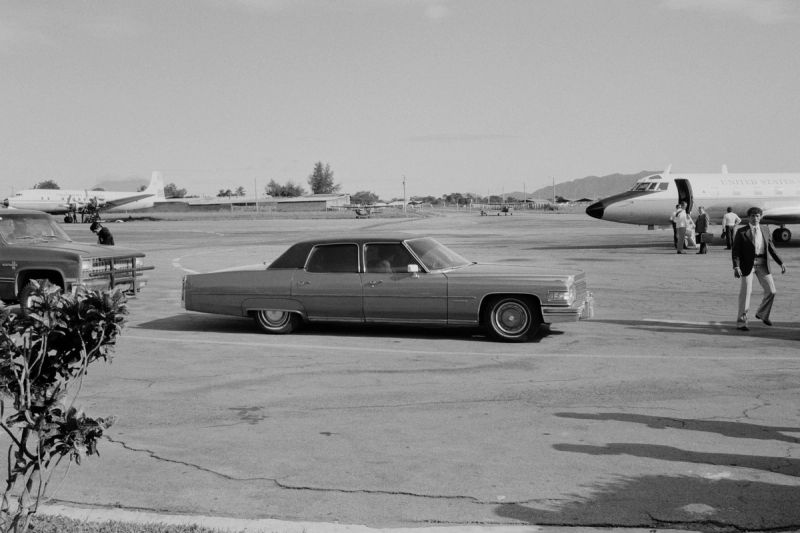
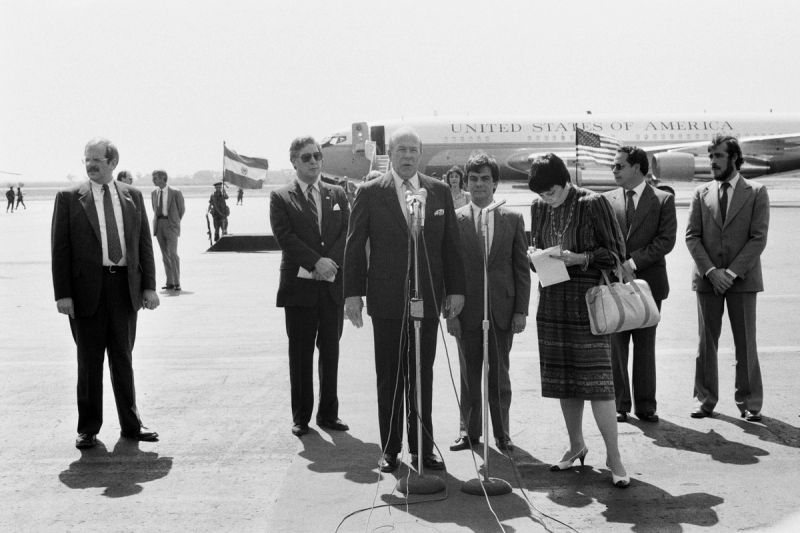
Why was an armored Cadillac at the airport in El Salvador?
That is the five-ton ambassador's car coming to the military air base, which was used by the CIA for the Contra war. This was outside of San Salvador. We knew we were invited to come to get the picture. Whether George Shultz was there or some negotiator or some official from the United States, you went, because you might get a picture like this. Time did not run the image. I have a picture in this El Salvador book of a ten-thousand-pound limousine picking up a diplomat at the San Salvador airport.
When you see an official black Suburban on a street overseas, what do you think?
To see a black Suburban go by, which is what it is now, I'm thinking, where's the RPG? The embassy has a target on it because it has to be an American vehicle. If it's going to be overseas, make it a Toyota, would you? I don't get it, but that's from seeing too many armored cars.
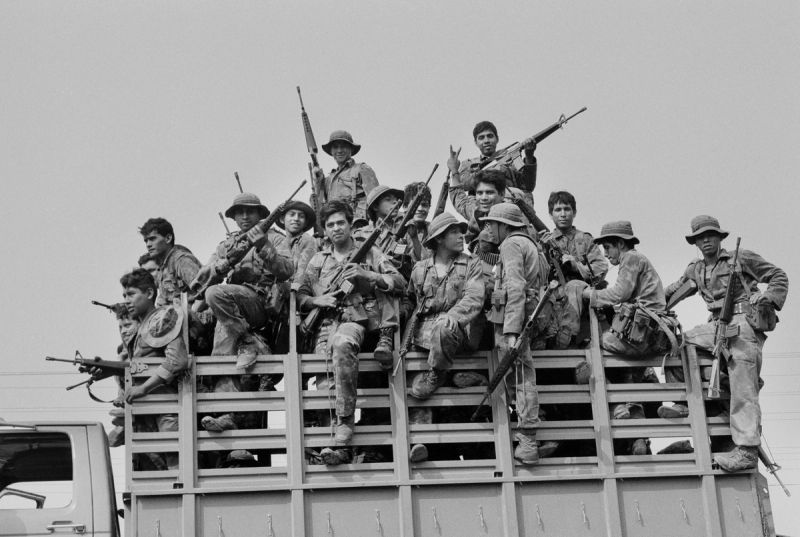
In 1983 you photographed soldiers from the Salvadoran government Atlacatl Battalion troops — the same forces responsible for the El Mozote massacre two years earlier. How did you get that close?
You embed with them. That's how you get an image. These are the same forces that killed a thousand civilians at El Mozote over three days. And then you see the other side — fifty-seven of their soldiers killed in one night at Tenancingo. Body bags. The guerrillas killed these guys.
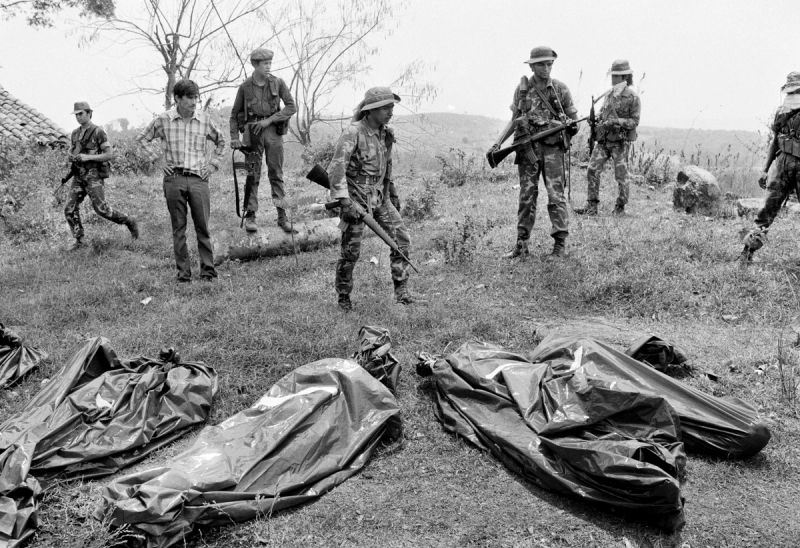
While based at Time magazine's office in El Salvador between 1981 and 1984, I took several trips to Guatemala to document the country's ongoing armed conflict.
What did you find in Guatemala?
Guatemala's the most sinister place I've ever worked. Sinister. They didn't want you to see anything. They massacred entire villages, the Guatemalan army. Trained by the Americans at the School of the Americas, in Panama.
[The U.S. ran the School of the Americas in Panama until 1984.]
What was the School of the Americas training these officers to do?
School of the Americas was a way for selected officers to rise in the ranks. Captains and above, I believe, applied. You wanted that on your resume. If you were an Argentine military officer, or Colombian, or Peruvian, that helped you become a general. We had influence in different points, and the American government utilized that.
Robert Nickelsberg photographed American foreign policy for Time magazine for nearly thirty years. After covering the conflicts of Latin America, Nickelsberg established his base in New Delhi from 1988 to 1999. During that time he covered the rise of religious extremism in South Asia and documented conflicts in Kashmir, Iraq, Sri Lanka, India, and Afghanistan. That period will be covered in part 2 of this interview series.
View Mr. Nickelsberg's work: https://www.robertnickelsberg.com/
Stories

STAY UPDATED
Sign up to be the first to find out when new stories and merch drop on THROAT. We respect your privacy and will never share your information with any third-party vendors. For real.