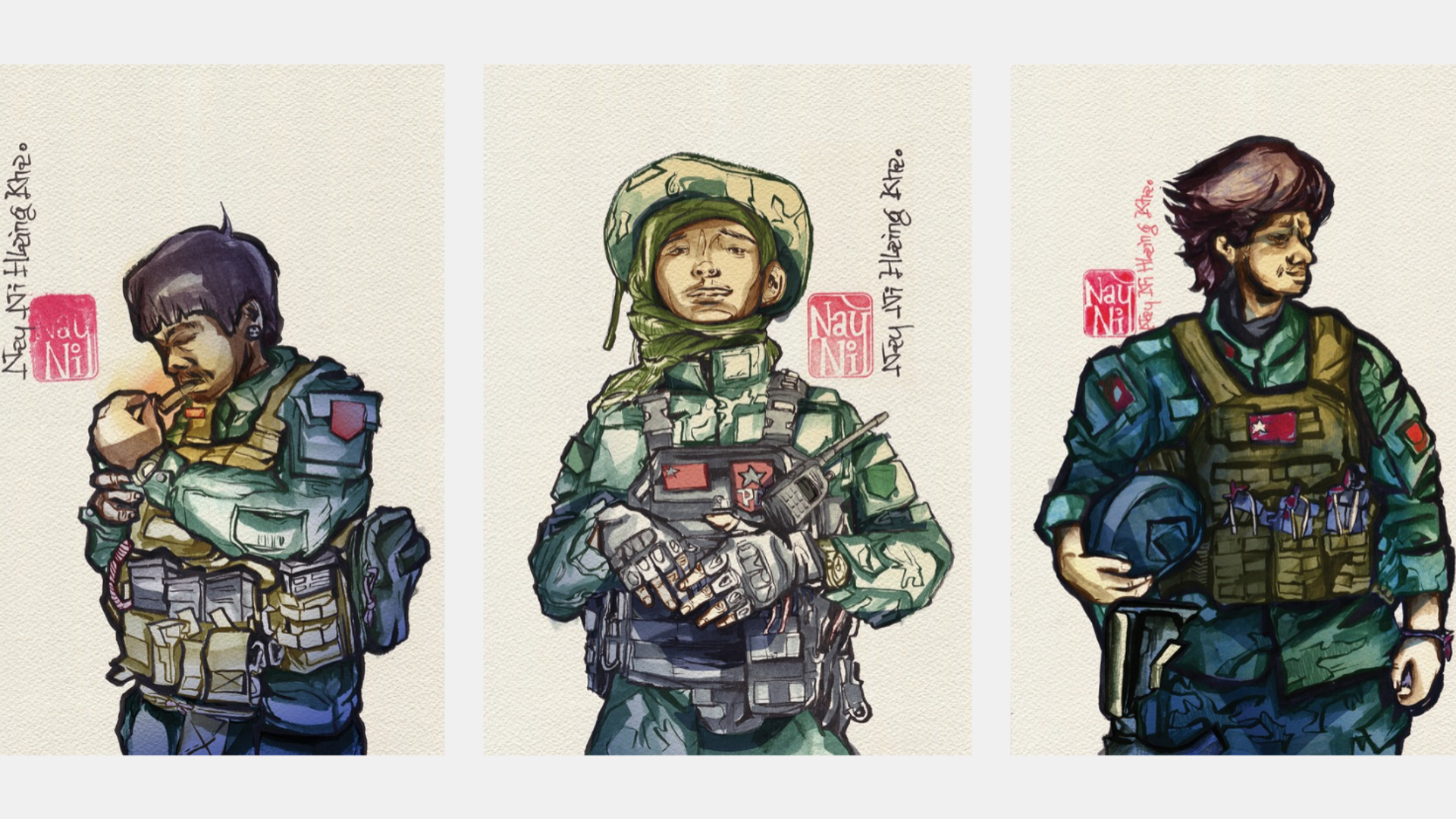
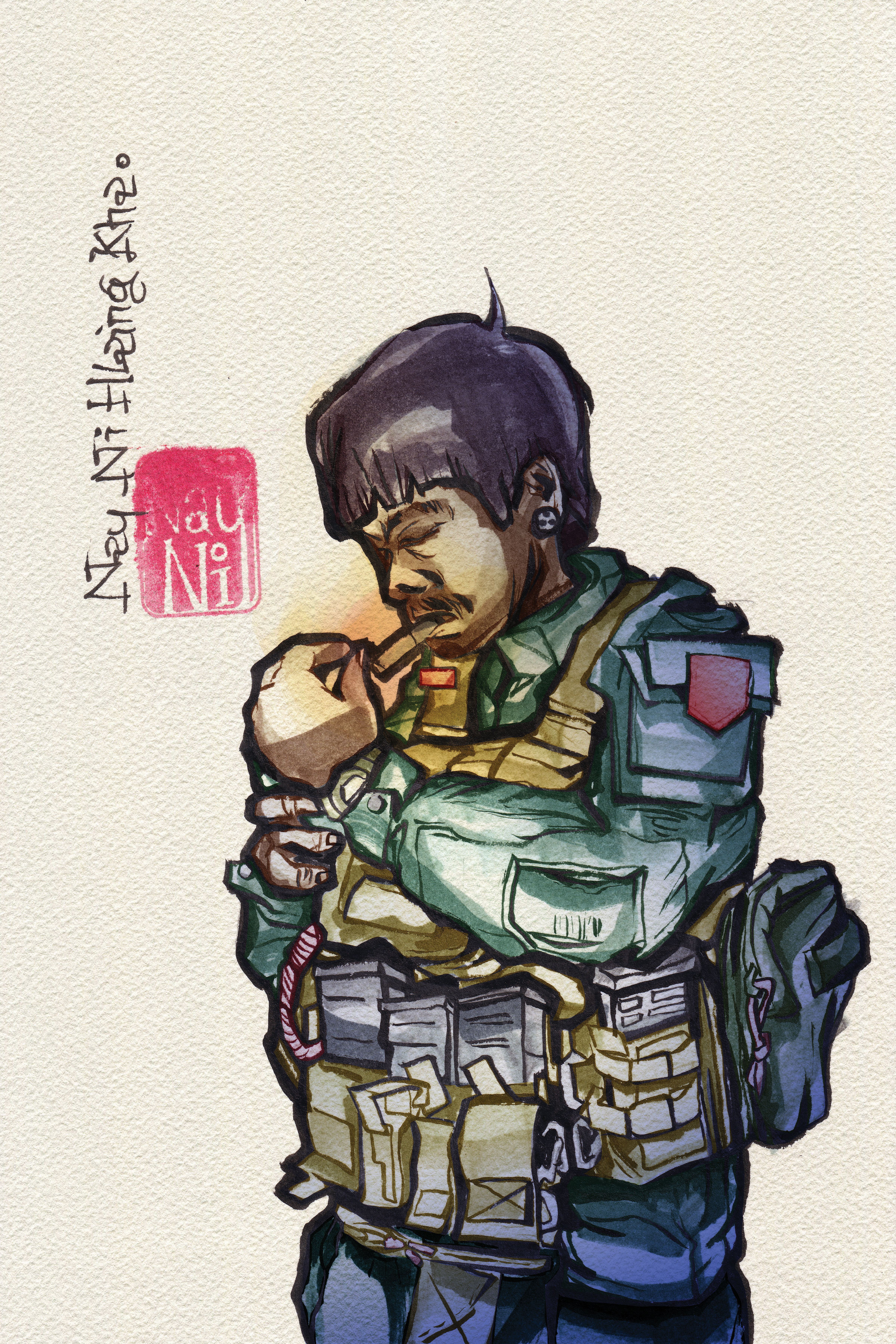
©Nay Ni Hlaing Kha, Illustrations & Fine Art Cartooning Line Ink on Paper and Digital Color
Back to the Front
Author: THROAT Staff
The Count
The conflict in Myanmar is now well into its sixth year. The Armed Conflict Location and Event Data project, which tracks political violence worldwide, ranks the country among the five most violent in the world. Fighting continues on several fronts, accompanied by widespread violations of international humanitarian and human rights law, and prolonged displacement, economic decline, and natural disasters have combined to deepen humanitarian needs.By the end of 2025, an estimated 21.9 million people in Myanmar needed humanitarian assistance. Of those, 15.4 million needed protection, and 6.9 million of them were children. Some 3.7 million people had been displaced within the country, around forty percent of them children. Nearly 200,000 more had crossed into neighboring countries since the military seized power in 2021.
The communities affected are contending with several crises at once. Armed conflict and displacement are compounded by restrictions on movement and on humanitarian access, by food insecurity and inflation, by the collapse of livelihoods, and by the steady loss of access to essential services. Across every category of protection risk, women, children, older people, people with disabilities, and other vulnerable groups have borne a disproportionate share of the harm.
Source: Global Protection Cluster, Myanmar Protection Analysis Update, September 2026, published by the United Nations Office for the Coordination of Humanitarian Affairs
The Map
Between January 2025 and March 2026, gender-based violence remained one of the most serious protection risks in Myanmar. Escalating conflict, repeated displacement, economic decline, forced conscription, and the earthquake of March 2025 increased the exposure of women and girls to violence while weakening the services meant to respond to it. Conditions worsened during the election period of December 2025 and January 2026, when heavier fighting and local disruptions to aid operations further restricted movement and humanitarian access.
Women and girls who had been displaced, or who lived in areas affected by conflict, the earthquake, and other natural disasters, faced heightened risk. Damaged infrastructure, difficult transport, movement restrictions, and a diminished humanitarian presence made it harder for survivors to disclose violence confidentially, to be referred safely, and to reach care, including services for survivors of gender-based violence, sexual and reproductive health services, and mental health and psychosocial support.
The protection cluster's severity mapping identified gender-based violence as the most prevalent concern, with six townships classified at Level 5, the highest on the scale. It placed 57 townships, or 17 percent, at Level 4 for threats to physical and psychological safety and well-being, and 175 townships, or 53 percent, at Level 3.
Source: Global Protection Cluster, Myanmar Protection Analysis Update, September 2026, published by the United Nations Office for the Coordination of Humanitarian Affairs
The Roads
The monsoon slowed the fighting in Myanmar. It did not slow the bombing. Through the wettest months of the year, the military flew between 400 and 420 air strikes a month. July was the heaviest.
The generals are not trying to hold the country. They are trying to hold the roads. In Sagaing and Magway, troops are running clearance operations along the transit corridors, pushing columns up the highways, and resupplying by river where the roads will not carry them. The objective is narrow: the choke points, the border crossings, and the strategic projects around them.
Elsewhere, the war has not moved to the military's timetable. In Kachin, Chin, Rakhine, Karen, and Karenni states, the fighting continues or has settled into standoffs; neither side has broken.
What the military holds is a set of lines on a map. It is holding them from the air.
Source: A political analysis of Myanmar reviewed by THROAT, September 2026
The Terms
Myanmar's military leaders have made state visits across the region, and in Naypyidaw the reception has been taken as encouragement. China, Thailand, India, and Russia each have strategic interests in the country, and the regime is using those interests to pursue a partial return to diplomatic standing on its own terms.
It has hardened its rejection of the Five-Point Consensus, the 2021 plan adopted by the Association of Southeast Asian Nations to end the violence, and has threatened to cut ties with the bloc's special envoys. The mainland states, Thailand, Laos, Vietnam, and Cambodia, have moved away from the bloc's collective position. The regime's bid for recognition will be tested this autumn before the United Nations Credentials Committee and at the regional summits in November.
Min Aung Hlaing's 100-day peace plan has expired without producing a credible path to negotiation. He has said that thirteen ethnic armed organizations accepted his offer, but no group fighting the military took part, and the principal resistance organizations were excluded or declined to attend. The talks have been held largely one group at a time, with allies and ceasefire signatories, under central control. The regime's negotiating committee has widened its contacts, and in July it met in Pattaya with Thailand's foreign minister, Sihasak Phuangketkeow, and the regional envoy, Theresa Lazaro.
In parliament, the regime has renamed the Union Peace Dialogue Joint Committee the Political Parties Group and submitted forty-three constitutional amendments that would enlarge and extend Min Aung Hlaing's executive authority. A dispute between him and Khin Yi, chairman of the military-backed Union Solidarity and Development Party, appears to have postponed the party's congress.
The World Bank describes an economy of stagnant growth, high inflation, and failed currency controls, and the Financial Action Task Force, which monitors money laundering, may impose further penalties.
Source: A political analysis of Myanmar reviewed by THROAT, September 2026
The Council
Through July and August, the resistance body called the Steering Council for the Emergence of a Federal Democratic Union finalized its organizational framework, held coordination meetings, and began to present itself as a credible political front. The federal units of Sagaing, Magway, and Mandalay will join the council, and revolutionary groups from Mon State are entering as an allied coalition.
Members are still debating the composition, constitution, and function of the council's Women's Pillar. There are also signs that an older division has returned, between the headquarters leadership of the National League for Democracy and party members who serve in the Committee Representing the Union Parliament, the National Unity Government, and the council.
The council has held formal talks with the United League of Arakan and its Arakan Army, and with the Spring Revolution Alliance, and its members have closer informal ties to both. It has also created a Military Strategy Coordination and Command Committee, co-chaired by senior commanders of the Kachin Independence Army and the Karen National Liberation Army together with the National Unity Government's Ministry of Defence. Whether that committee produces integrated military operations has not been demonstrated.
Members now describe the council less as a loose gathering of leaders than as a platform for coordinating political, financial, and military decisions, one that has committed itself to pursuing a political settlement. That commitment has been tested, as regime interlocutors and neighboring governments approached the Kachin Independence Organization, the Karen National Union, the Karenni National Progressive Party, and the Chin National Front, encouraging each to negotiate separately with the military. All four declined and reaffirmed their preference for broader talks conducted as a bloc. The regime, which prefers to deal with armed groups one at a time, is unlikely to accept those terms, and the impasse may continue.
Source: A political analysis of Myanmar reviewed by THROAT, September 2026
The Table
A few years ago, the prospect of negotiation was seldom raised openly by any of the parties to Myanmar's war. It is now discussed more freely, including in preliminary conversations about how eventual talks might be arranged. The obstacles to a settlement remain largely in place, however, and the analysis indicates that several governments in the region regard substantive political dialogue as still some distance away.
Source: A political analysis of Myanmar reviewed by THROAT, September 2026
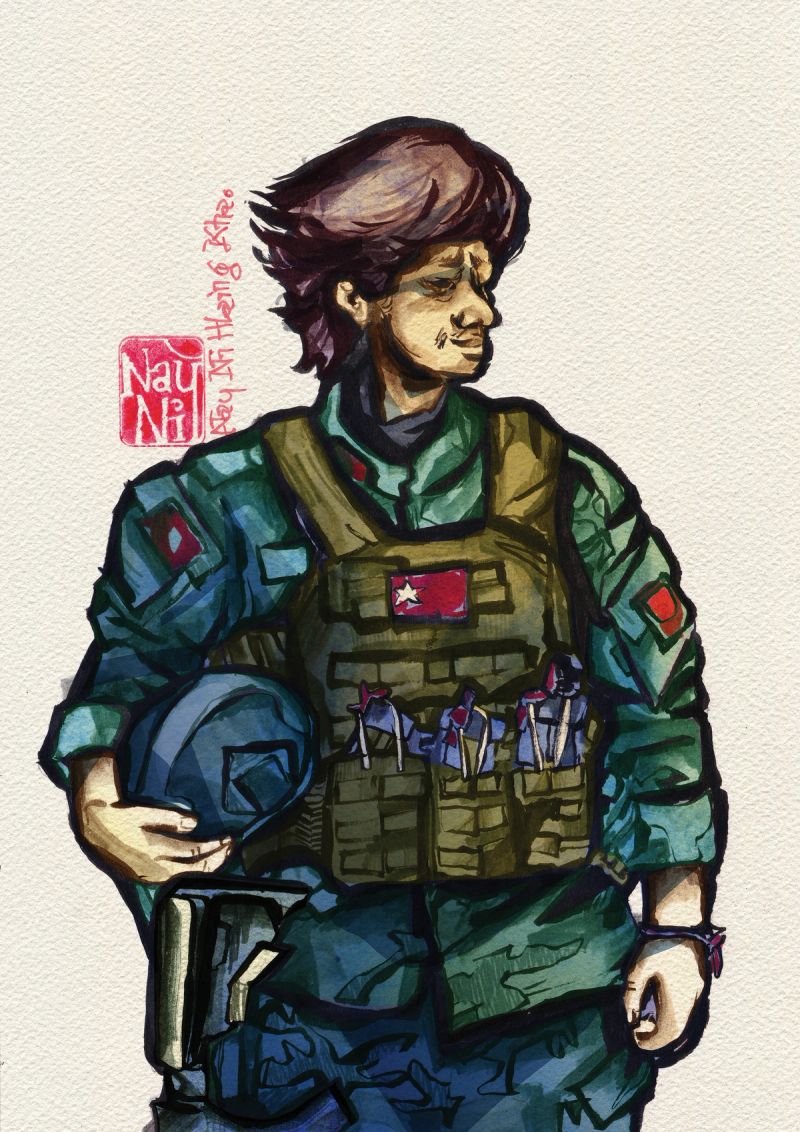
Nay Ni Hlaing Kha Biography
Artworks by Nay Ni Hlaing Kha
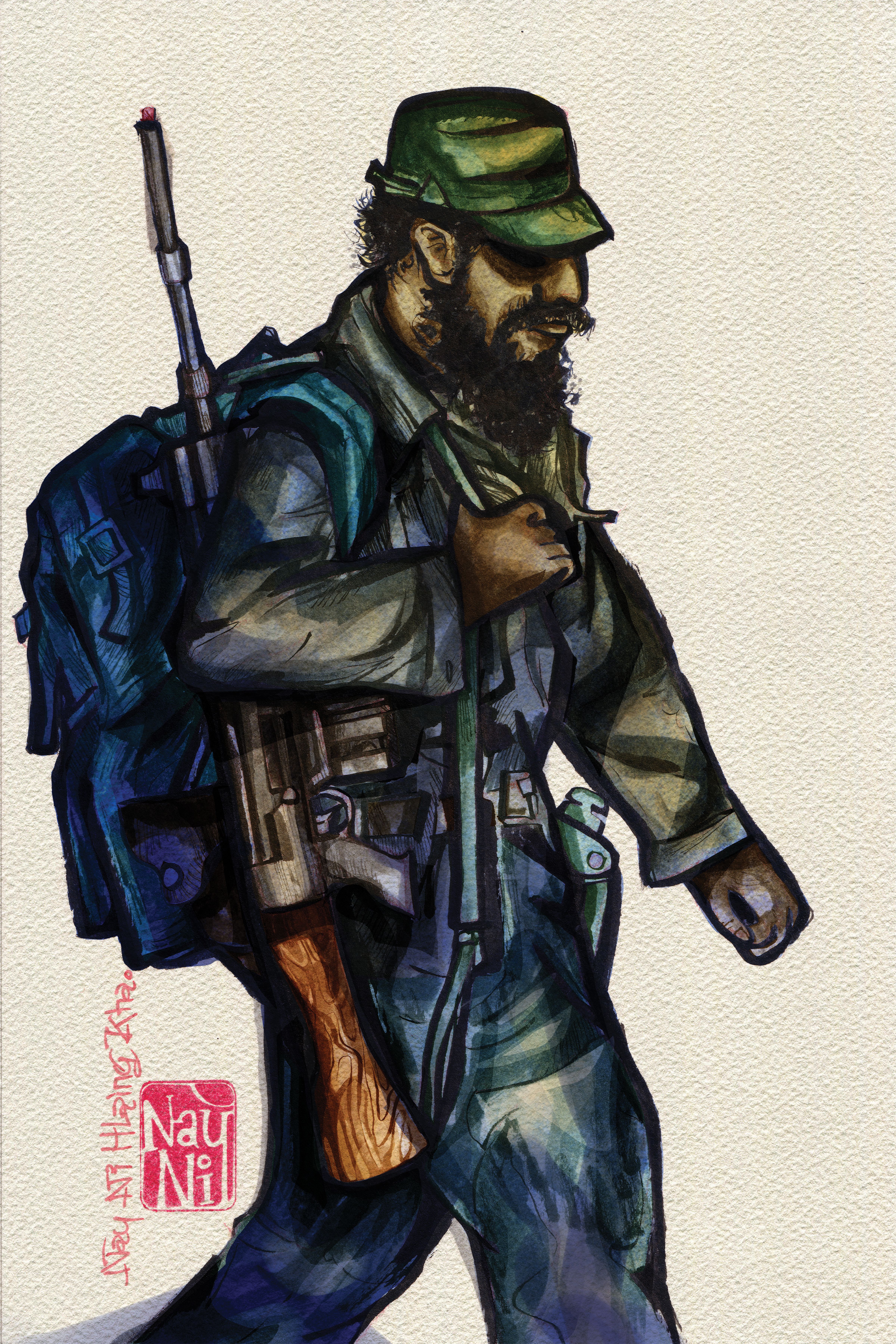
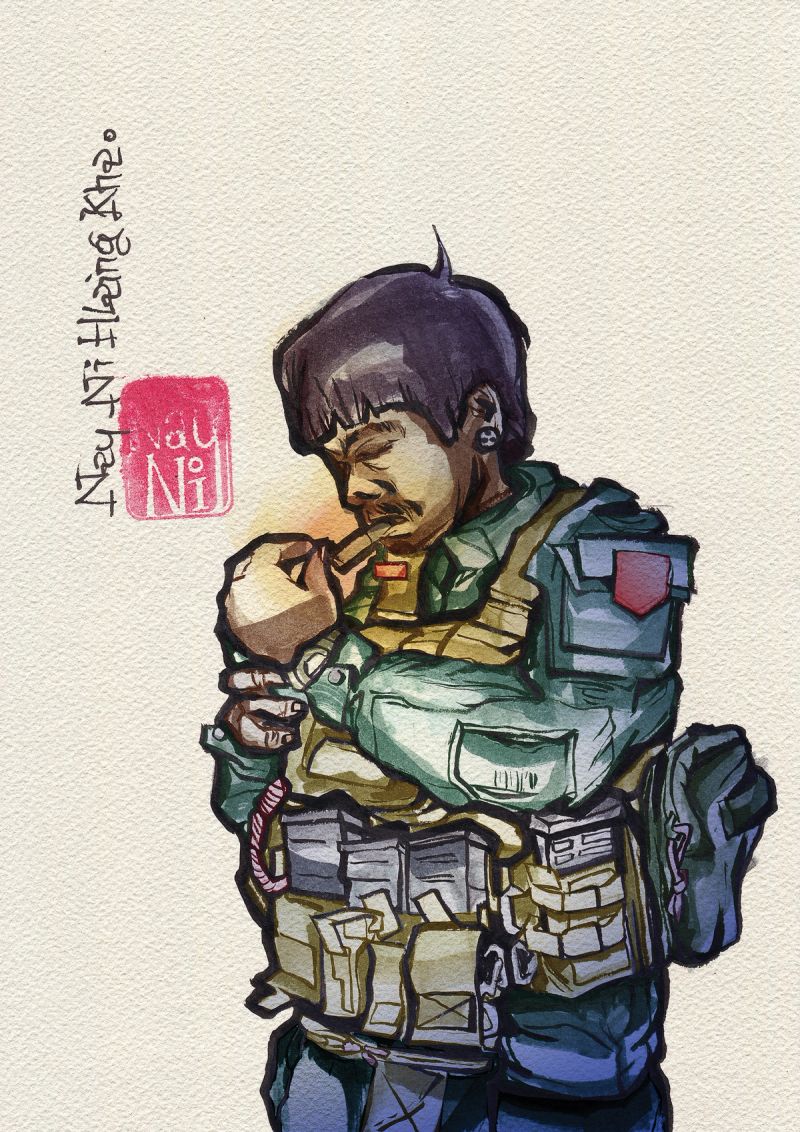
Nay Ni Hlaing Kha, Che, (2025), 16×24 in, Illustrations & Fine Art Cartooning Line Ink on Paper and Digital Color
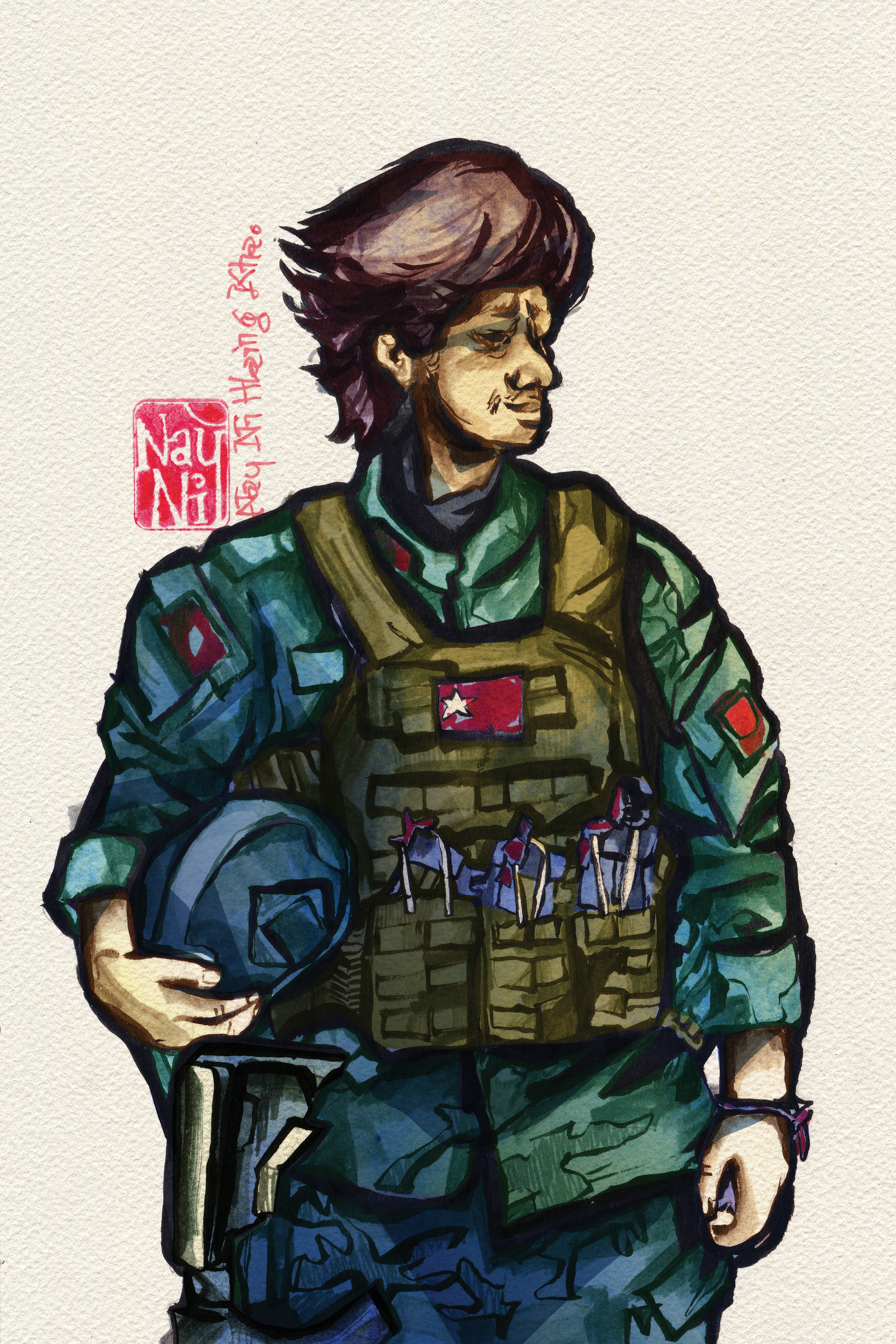
Nay Ni Hlaing Kha, Helmet Off, (2025), 16×24 in, Illustrations & Fine Art Cartooning Line Ink on Paper and Digital Color
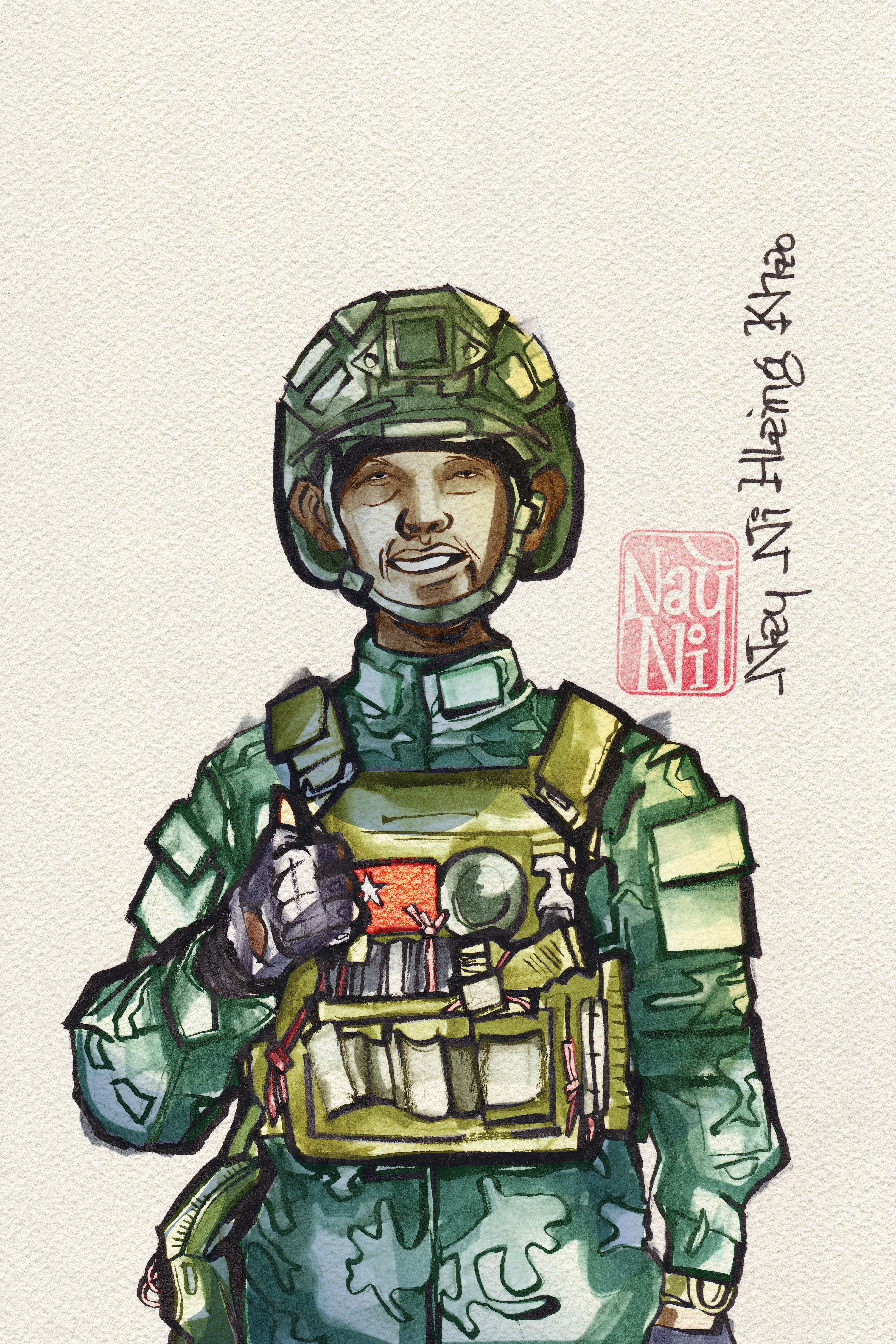
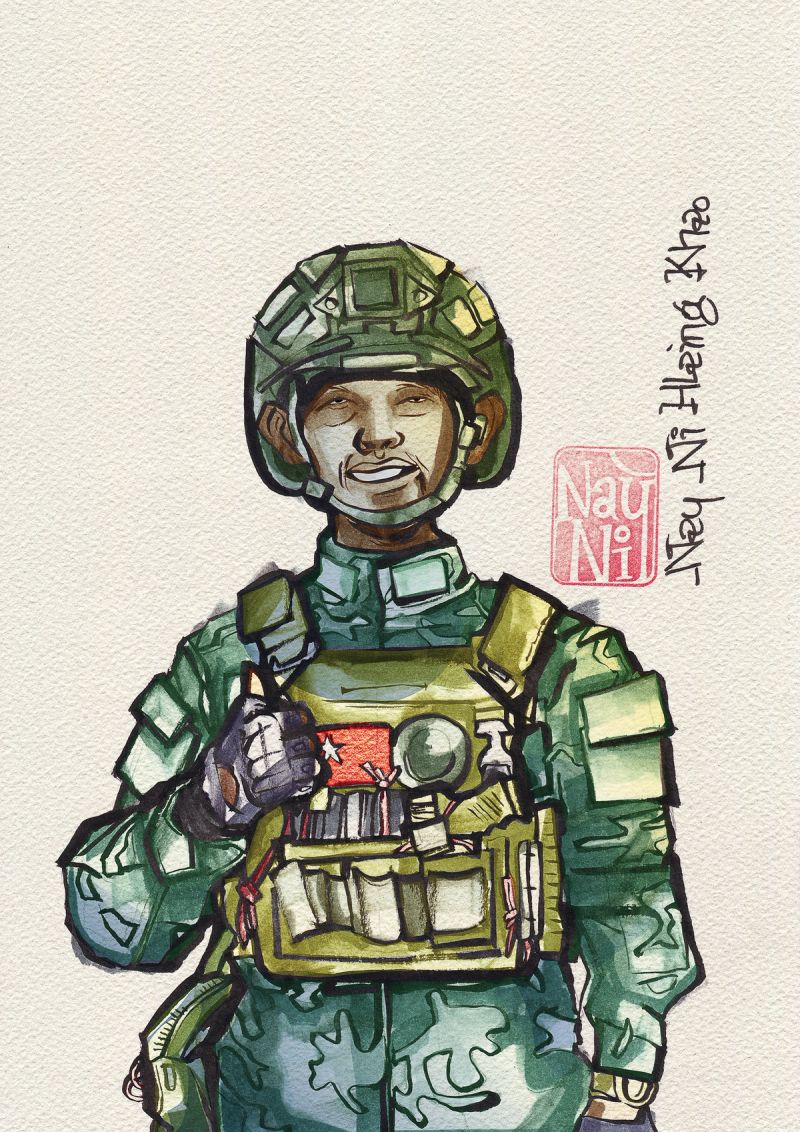
Nay Ni Hlaing Kha, Thumbs Up, (2025), 16×24 in, Illustrations & Fine Art Cartooning Line Ink on Paper and Digital Color
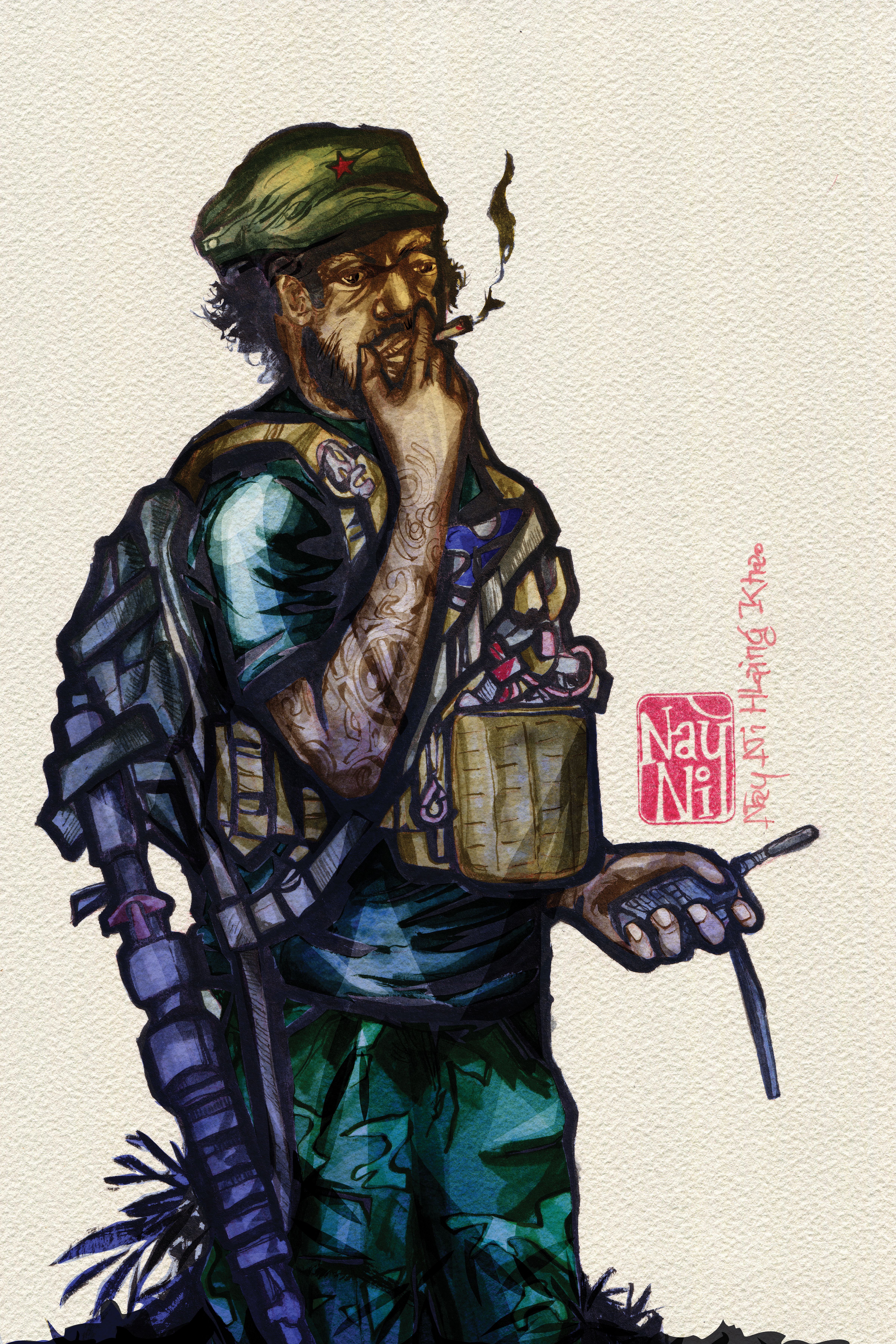
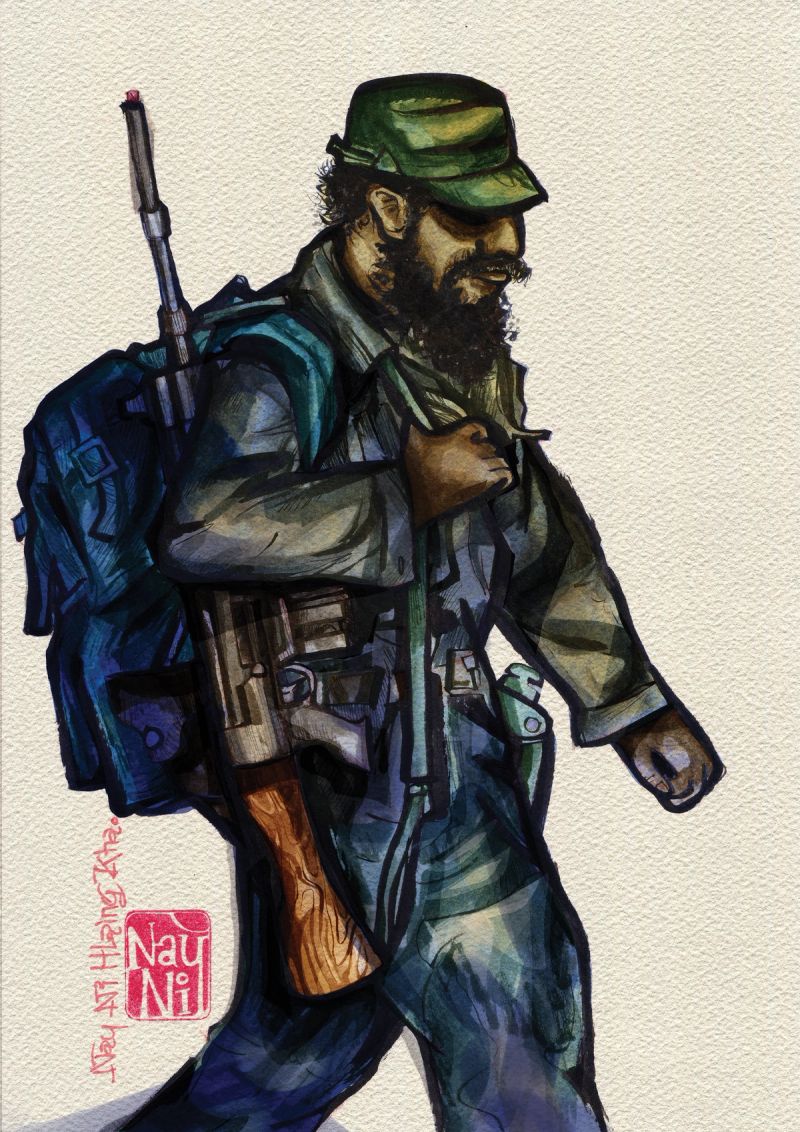
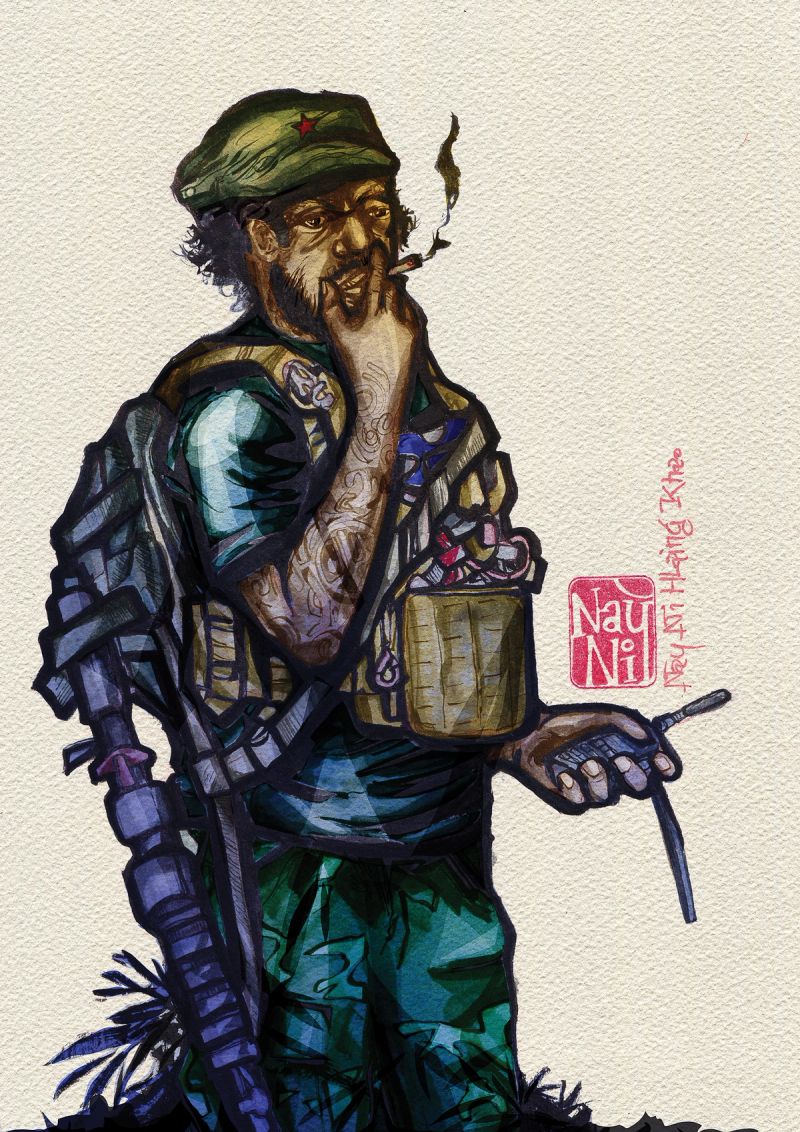
Nay Ni Hlaing Kha, 21st-Century Version of Che, (2025), 16×24 in, Illustrations & Fine Art Cartooning Line Ink on Paper and Digital Color
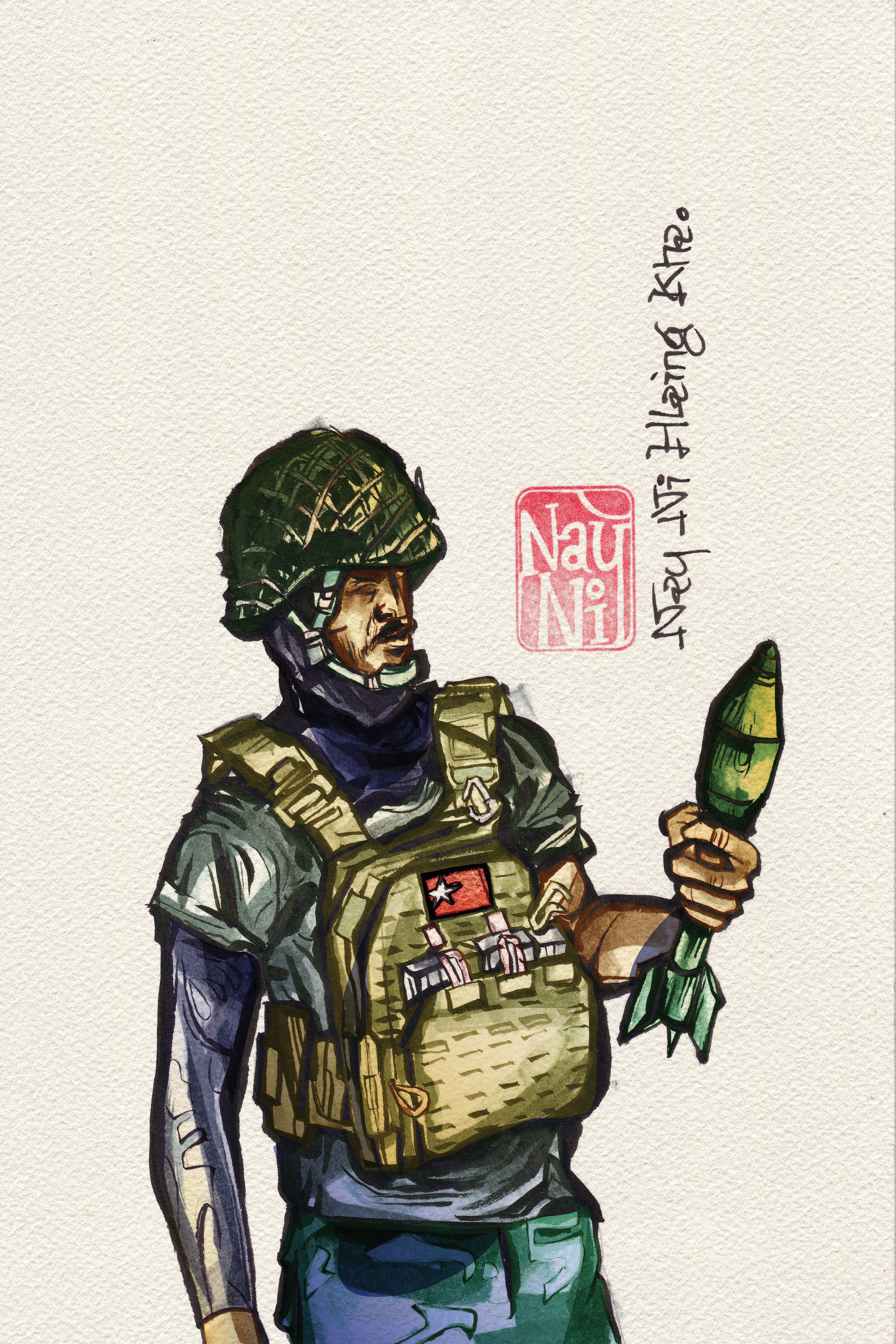
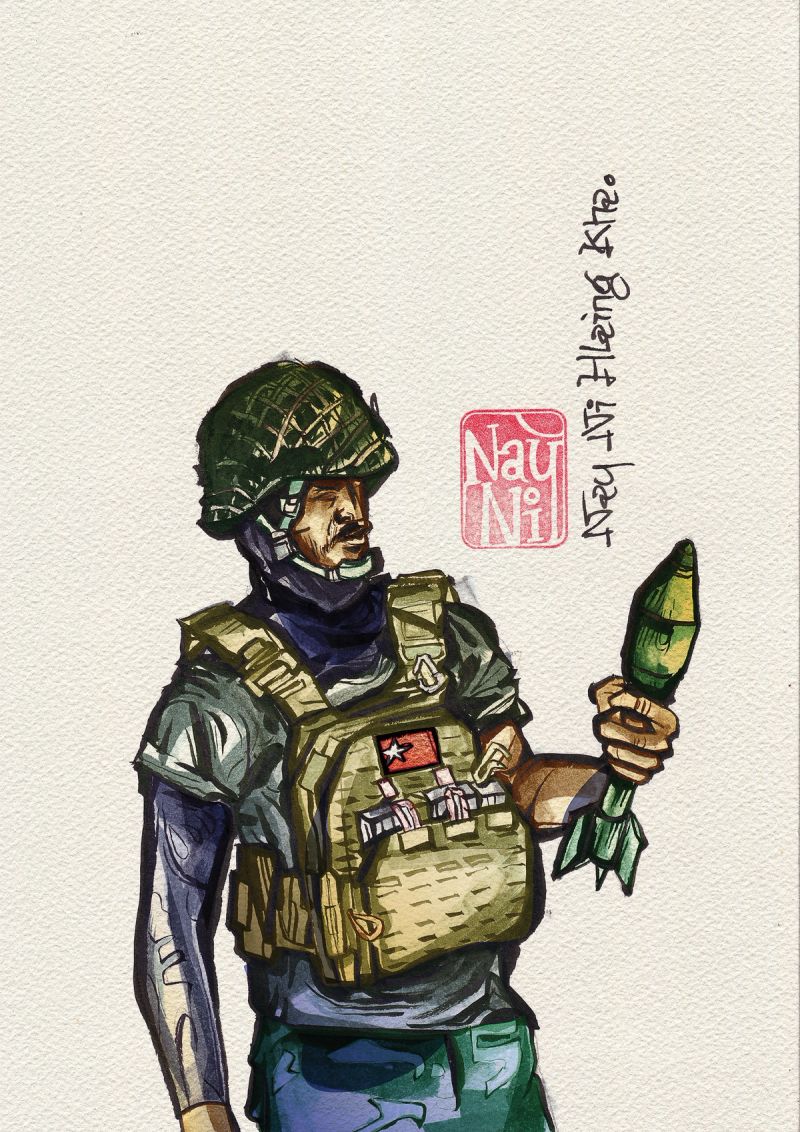
Nay Ni Hlaing Kha, 60 MM, (2025), 16×24 in, Illustrations & Fine Art Cartooning Line Ink on Paper and Digital Color
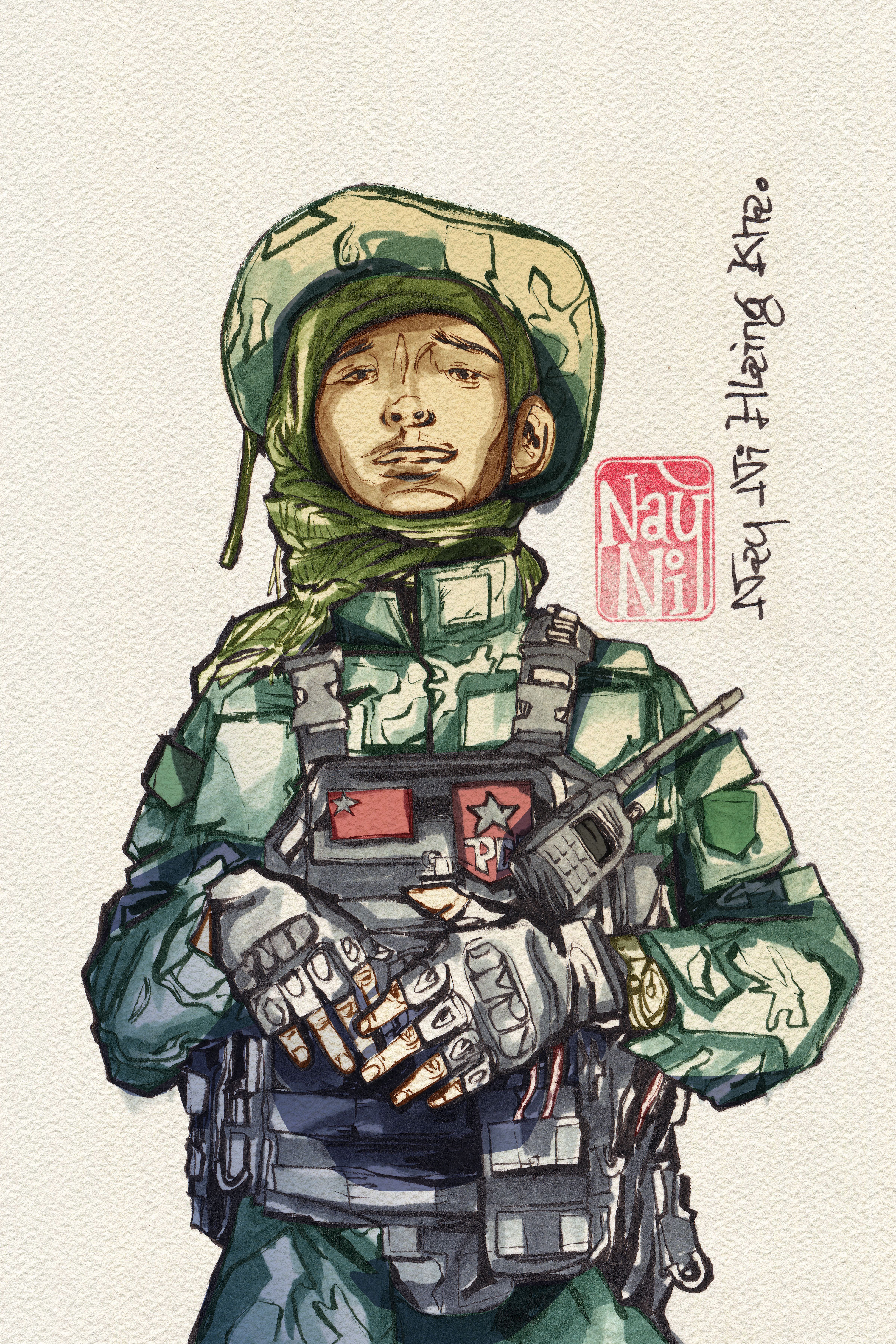
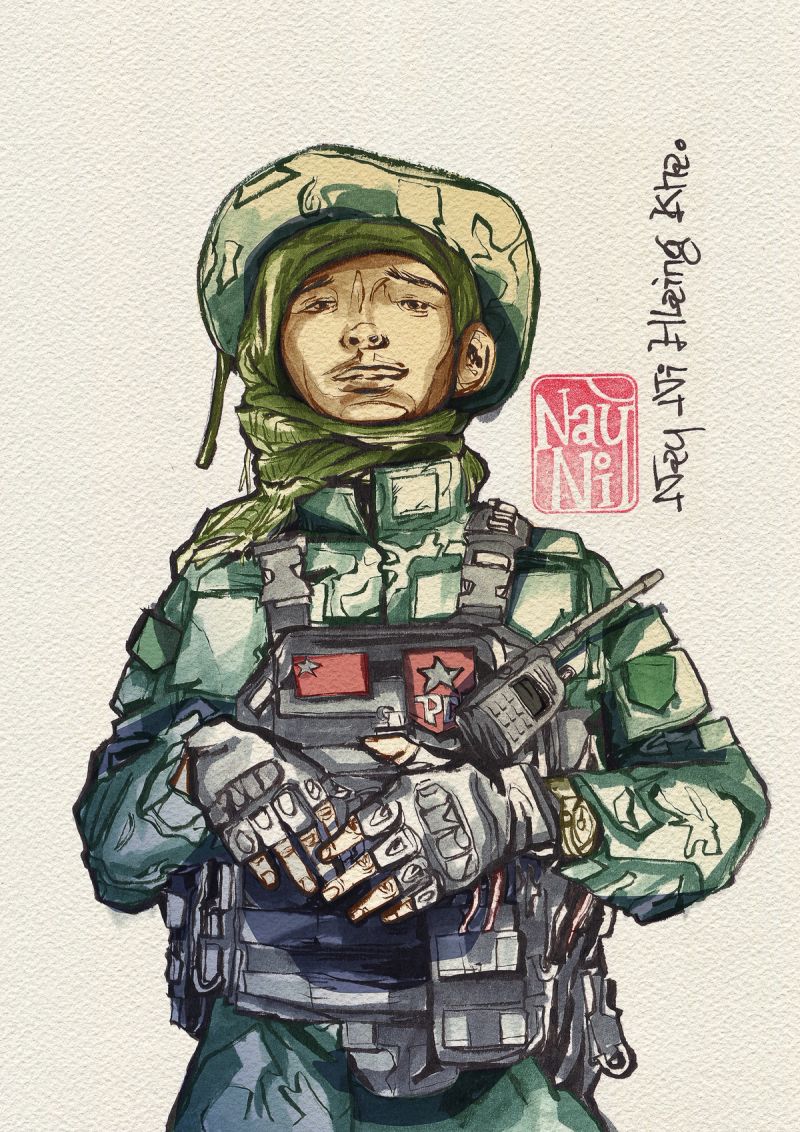
Nay Ni Hlaing Kha, PDF, (2025), 16×24 in, Illustrations & Fine Art Cartooning Line Ink on Paper and Digital Color
Stories

STAY UPDATED
Sign up to be the first to find out when new stories and merch drop on THROAT. We respect your privacy and will never share your information with any third-party vendors. For real.